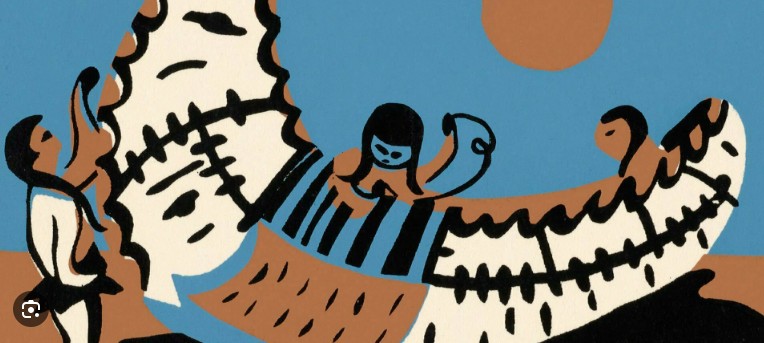
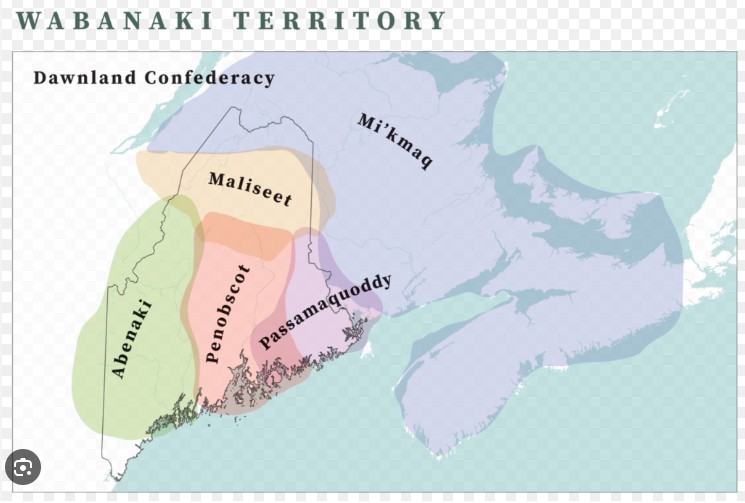
Through twelve or more millennia nations of the Wabanaki, or “People of the Dawnland” were the original caretakers of the land where the sun first touches North America*. Spread across present day Maine, New Brunswick and Nova Scotia the primary nations were the Maliseet, Micmac (Mi’kmaq), Passamaquoddy, Penobscot, and Abenaki peoples, with thousands of members maintaining distinct tribal governments, cultures, and languages.
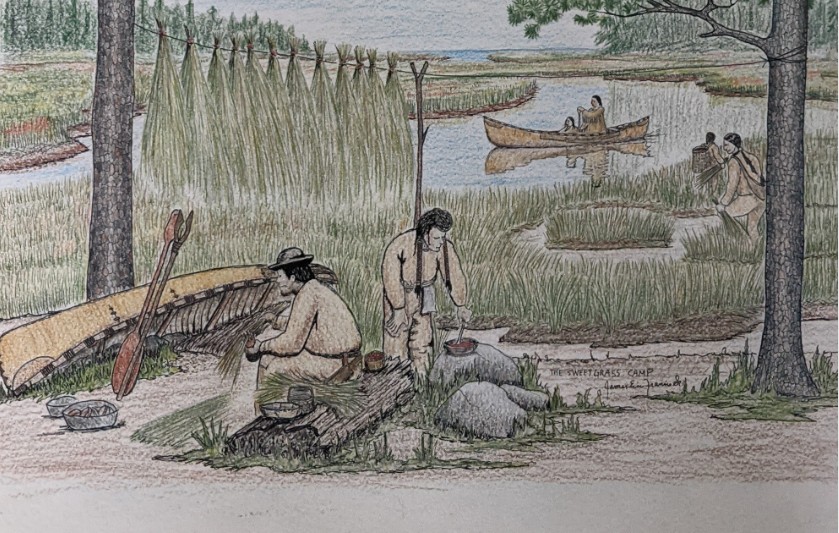
The waters and marshes were full of fish, clams, oysters, and lobsters. In the spring, spawning schools of fish from the oceans to freshwater provided a large bounty; salmon, herring, and smelt migrated each year. Sturgeon roamed the larger rivers and estuaries. There was moose, deer, beaver, seal and bird hunting. The Wabanaki actively altered the environment by cutting undergrowth and starting controlled fires to provide a habitat for the animals they hunted and the plants they harvested. In the southern and western areas, including some near the Kennebec River but mostly farther south, the Wabanaki also planted corn, beans, and squash as well as hunting. In the northern and eastern areas, they were almost fully dependent on hunting and gathering. Rather than living in a single location, they followed the food seasonally, carrying their houses with them. Wabanaki Sustenance and Self-Determination, by Jillian Kerr – Wabanaki REACH
What did those who lived on these lands believe lie beyond the sunrise? We can’t ask them now; the history of Maine has largely been written by European explorers, settlers, their descendants and present-day researchers. An early historical record never existed in written form, and is now reconstructed from artifacts, archeology digs and word of mouth traditions, passed down through generations of indigenous peoples. One imagines the seasonal hardships and ingenuity shaped the progress of these peoples. They were free and perhaps content in the sense of the opportunities and independence that they were afforded. And then suddenly these established cultures were tipped over, forever.
When the Europeans arrived in the area, they found lush stands of fruits and nuts along the coasts and waterways, but more dense forests inland. A pre-colonization population of tens of thousands then rapidly declined due to a century of conflict and disease*. Despite enduring these significant traumas, they continue to practice their culture and protect their sovereign rights, through to present day Maine and the provinces of Eastern Canada. Home – Wabanaki Alliance
They did not know of this long history of the lands, and the peoples, upon their arrival in Acadia national park. The etymology of the park’s name begins with the Mi’kmaq term akadie (“piece of land”) which was rendered as l’Acadie by French explorers and translated into English as Acadia. Acadia National Park – Wikipedia
After that restless first night on this historic island the sun broached early through the side window, rousing them awake, lingering and groggy. Awakened twice in fact before a quiet morning run to the waterfront, then up to the trails that lead to somewhere, they didn’t care, tall stands of trees, weathered rocks and sandy dunes. Touching and talking along the way. They paused together on the small front deck and talked about breakfast. Acadia Cottages
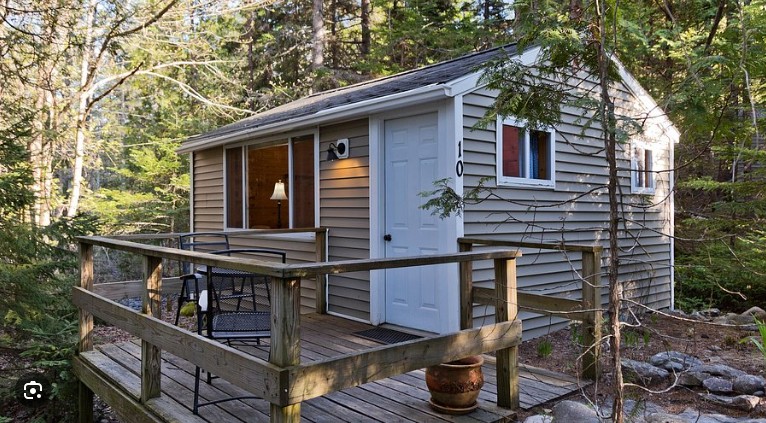
There is an interesting couple in the next cottage, with a golden retriever and otherwise a mirror image of them. Shouts of hello and introductions and cautious exchange, neither pair wishes to break their isolation; why they came. The news tries to intrude on their life; a flood, a fire, a hearing, a shooting, this is all a repeat of last year’s news, they will make their own stories. Let’s go look at places to live, she says, and they do. The rustic look remains expensive, but they don’t want for much, there is no new to be found here, small and clean will do just fine.
Their first local purchases were staples and extra blankets for the cabin, two weeks’ worth while they sort out living arrangements. In the short term it is not a bad way to live…They lingered again the next morning, with a short run; he ran an extra loop along the waterfront and explored the start of a rising dirt trail, returning to wake her for a second time. Waking up twice is a new habit. Through the window, the bright waning moon danced with Jupiter on the early horizon. Coffee with a biscuit and they set off on foot with a map and light backpacks; the sun is now fully risen. seabirds sail low across the bay; a fishing skiff escapes its mooring and moves quietly around the north side of the inlet and out of sight. They start to get the lay of the island, small inns and cabins scattered about, what passes for a general store and the coffee house / bakery, a few other local storefronts not yet open for the day, they wonder how many of these stay open through the long dark winter ahead. This is a postcard or a temporary mirage; they have not yet experienced even a full season in this land to make a life. Next up is the task to acquire are proper hiking clothes, running shoes, lightweight boots, two slightly used bicycles and a pair of kayaks. What better way to explore, days two and three on foot, on bicycle, and the rest of the week by kayaking.
Day three brings a short diversion into the hillside trail system; there will be much more time to explore this, but a taste of the inland trails is on their mind. Island birds circle at a distance and dart through the close in tree boughs. Common warblers, thrushes, blackbirds, sparrows; and looking at a northern goshawk, there is a lone loon calling from a small pond across the clearing. At this time of day, the deer and fox are in quiet hiding, while brown tailed squirrels’ rustle through the undergrowth. They cross paths with a small turtle making its way from its birth home, away on its own grand adventure. It will take time and chance to spot the full breadth of wildlife; they won’t reveal their places so willingly. More sounds ahead, humans of course, nods and helloes and then they pass back into the silence of being alone. After an hour or more they stop for a packed lunch, the grass is still high; they settle in. They don’t really know what they are doing or where to go, though the map guides them purposefully in a long loop. More walking, a bit anxious now, and suddenly somehow, they cross over a small gravel road and are back to the start, having navigated well that first tentative outing. The solitude of being far away and well alone forces a type of closeness that they don’t mind, they may one day tire of constant time together, but they embrace it now, after many years of anticipation.
Their first long hike involves a drive to Ocean Path, along the southeast side of the island. This is where they fall in love with the island and all that it has to offer. Heading out early they start at a sandy beach and wind their way up and down across granite cliffs. A hard work out that doesn’t explicitly involve running. It’s all good to exhaust one’s elves in the bright sun and salt air and cloudless sky, an eight-hour hike with a backpack full of food and drink, he always comes prepared.
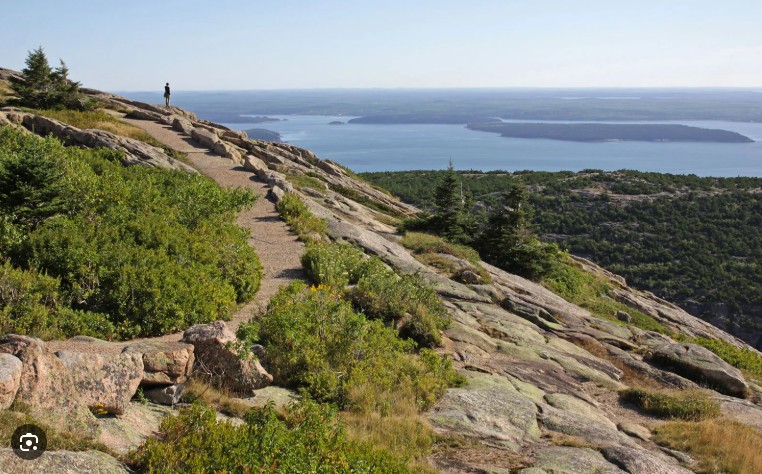
At some point just off the furthermost part of the trail they finally find quietude, and solitude from other hikers, they remain desperate to be alone and apart, it sustains them. She scrambles ahead to scout the route. A slow ride back with a stopover for crab soup, bread and cold drinks, hot showers and together in deep sleep.
“The Wabanaki traveled to the island in birch bark canoes to hunt, fish, gather berries, harvest clams and basket-making resources like sweetgrass, and to trade with other Wabanakis. They camped near places like Somes Sound.”
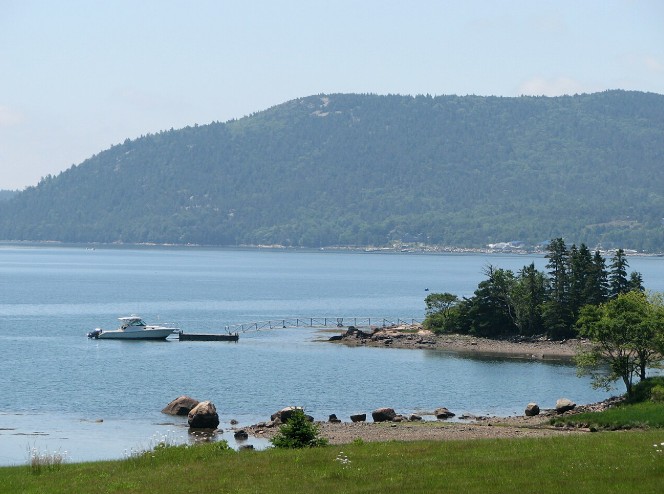
On day four they put in the kayaks at Somes Harbor, this should be an easy trail paddle, sheltered from the main strait of Somes Sound, a chance to test their technique and set up and paddle stamina. Scores of small sailboats and motorboats already out on the water, stay close to the shoreline, it doesn’t come naturally just yet but is a small safe start. The aim today is to explore these waterways when the day is right, and the tides are in their favor. He is used to paddling alone and running together with Terry. Today he carefully leads the paddle across the main straight and through a dozen small inlets. The water is flat except for the small wakes that boats discharge and drift across. The sun is high, and white clouds skip across the sky as the wind starts to rise. A lone cormorant drifts across the water in front of them; it prefers to hunt alone. Kerchunk, kerchunk the small waves slap against their sides and it takes some effort to hold straight. Thirty minutes out becomes forty minutes back against the northwest breeze, it takes some effort to progress, heads down and silent now, working steady. In time the landing re-appears, they guide into a hard sandbar, and then tip over before they can dismount, crawling sideways with no shame. Well, the whole endeavor takes some practice. And today with a focus on form the exploration was limited. A hike and a kayaking, they were just touching the toe of this large corner of land.
A week stretches into two, and then four; finances are not a problem in the short-term and the rhythms of late summer capture them. They test several more of the day trails, Acadia Mountain Trail, Wonderland trail to the South, and to the far east they tackle Precipice Trail, and walk through the areas that house full time populations. Bar Harbor (expensive), Bass harbor, Isle ford, seal Cove, Seal Harbor, Sorrento. Seasonal cabins and year-round houses, maybe half of those are second homes, smaller places for the locals who live off the tourism, and some like themselves that wish for a remote change of life. They present themselves as long term tourists and in some sense they are.
September 4th, the day after Labor Day, suddenly quiet in the mornings, at the coffee shop and on the roads, welcome to late summer, time to find a house if they plan to stay on. Mary Jackson was raised in a small town in coastal Maine. After college she spent some time in retail sales and then decided to obtain a real estate license in her spare time; it turned into a part-time career. “Do you know what you are getting into?”, she said with the trace of a smile on her face. If you can afford it, not such a bad gig, you can rent the house out for four months and pay off a full year of mortgage. And then travel if you like and return in late fall.
The house was built in the 1940’s and showed its age, bleached red siding, squarely set rooms, dormers on top and a partially obstructed view of the bay. The original hardwood floors could be refinished, the two bathrooms needed work, and the kitchen / sitting area was functional at best. It could be a two-year project to restore and upgrade it. He was good at minor repairs to minor appliances, but the scope of this was an ocean beyond his experience. Well, why not? Reprieve came in the form of a local contractor, Frank Seymour, who grew up on the island and knew its secrets. $100,000 budget to restore and upgrade a small house, have at it. And it turns out that this house had a history. It was built by a boat captain who fished for cod and lobster every year, based out of Portsmouth but retreating to the island every offseason. He married a young local girl, a teacher whose family had lived on the island for generations. Frank was wary at first of these short-term residents. She put him at ease as she did all others, helpful and friendly and interested in who he was and what he had to offer.
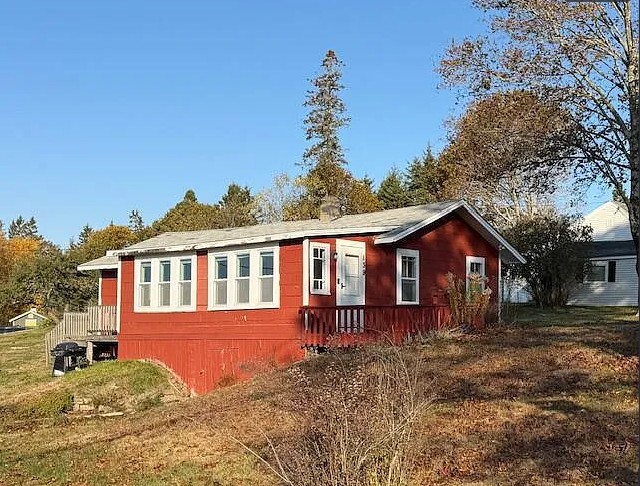
Attrib: Harbor Drive Harbor Drive – The Knowles Company
They managed to occupy the house for close to a week, accumulating a few salvaged pieces of furniture, a steel bedframe and “slightly” used mattress. Personal possessions included their bikes, kayaks, various trip supplies and travel clothes. A tiny inventory that could be pushed into one corner of the admittedly small main bedroom. And so, as work began on the house in mid-September, they decided to take a long hiking and kayak excursion north to the St. Croix River, and then further by car to Quebec City. They had some practice now with the kayaks, but still it was a dangerous sport. Up here one could not pick the ideal weather, the tides pulled, the waters often choppy and sprouting unexpected whitecaps. Experience comes with time, one quickly learned. With some luck in a few weeks, the dusty / dirty part of the renovations would be complete, and they could reoccupy as semi-squatters in a small corner of the structure during the subsequent improvements. Winter was approaching, materials were sourced from downstate, the contractor had never taken on a project of this size and scope; what could go wrong…? _________________________________________________________________________________
*Although there can be no exact figures, it is estimated that there were about 75 thousand people in this area in 1500 with about 35 thousand of them in what is now Maine. Even by 1600, the population had declined, most likely due to European diseases to which the Wabanaki had no immunity. The Popham colonists saw Wabanaki everywhere they went, but the 17th century would see a large drop in the population with a 90% reduction in many places due to both death and displacement. Entire tribes were driven to extinction. The years 1615-1619 are known as the “great dying” and over 50% of the population is thought to have died in those years from European diseases.
The border established between the United States and Canada after the American Revolution split the Wabanaki homelands. The confederacy was dissolved around 1870 due to pressure from the American and Canadian governments, though the tribal nations continued to interact in their traditional ways.