“Optimism …says there is no fundamental barrier, no law of nature or supernatural decree, preventing progress. If something is permitted by the laws of physics, then the only thing that can prevent it from being technologically possible is not knowing how. David Deutsch, The Beginning of Infinity.
I don’t wish to avoid or withdraw from technological progress and have tried to embrace technology within my career and personal life. I often consider this quote from a book I read fifteen years ago; pre iPhone, long before generative AI, self-driving vehicles, delivery drones, gene technology, and endless data centers. If I were alive one hundred years ago, I would not be able to imagine the technological and societal changes driven through the introduction of new technologies. Perhaps we can take comfort in the great improvement in our quality of life. Though at the expense of our global-wide climate and the greater environment for sure.
See link to page – full discussion with additional links and references: technology: progress or principles? – Welcome
Artificial Intelligence (AI) We have no choice but to accept the emergence of AI-enabled technology; it was always going to happen. I like reading in-depth answers on my inquiries, or design drawings for home improvements, or wildlife identifications, and with detailed information on a wide variety of research topics. But at what cost?
Traditional searches primarily retrieve indexes and existing links from database servers. AI queries have been estimated to require roughly 10 times more energy than a traditional, non-AI Google search engine query. If an AI search involves creating or analyzing multimedia, energy usage spikes exponentially. Image Generation uses significantly more compute cycles, consuming energy equivalent to charging a smartphone. Video Generation is the most demanding task of all. Generating a single short AI video can require enough electricity to run a household microwave for an entire hour.
On an individual scale, a handful of AI searches won’t heavily impact electric demand. However, because hundreds of millions of people rely on these tools daily, the collective pressure on global power grids is severe. Data centers globally consume an immense portion of national grids-for example, accounting for roughly 17% of all electricity demand in Ireland, and more than 10% in several US states.
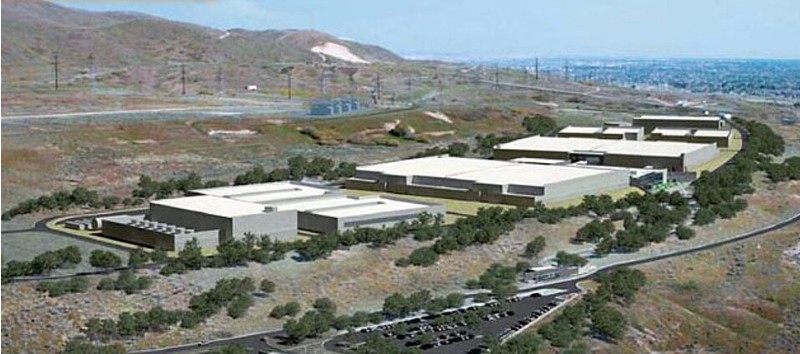
Data center in Utah – Creating User:حمزة مستقيم
Can we return to traditional searches? Not a chance. The best opportunity to at least partially address the rising energy footprint (and cost) of AI lies with research and application of efficiencies to manage these applications. Hardware Innovations related to memory, chip design and programming can enable data centers to run exponentially more computations per kilowatt. Still, I think that we are running uphill as demand load projections continue to increase.
Queries (AI queries of course!) suggest that “AI-driven efficiencies in physical industries can eventually drive net global energy demand lower relative to computing costs, but this shift is unlikely to occur before the mid-to-late 2030s.” While AI computing costs and data center power consumption are spiking heavily right now, these physical sectors—manufacturing, transportation, and logistics—are the largest energy consumers on earth. Because their baseline energy footprints are massive, even single-digit percentage efficiency gains in these sectors can mathematically offset the massive electrical demands of the data centers powering them.
When Will the Tipping Point Occur? Energy analysts and institutional models suggest a net-energy savings turnaround will likely happen in phases: 2026 – 2030: A deficit phase as data center infrastructure is fully developed. Slow corporate adoption cannot keep pace with tech expansion and computing capacity outpaces immediate physical energy savings. 2030-2035: Massive hardware efficiency improvements, along with autonomous trucking fleets, smart grids, and AI-optimized factories will scale globally, beginning to equalize the energy ledger Post-2035: operational fuel and electrical reductions in manufacturing and logistics will reliably exceed the energy required for generative AI applications.
Does this fall into the category of “sit tight, nothing that I do in the short term will make a measurable difference” in future energy demand? Though as an individual I can’t alter these global trajectories; I will watch and learn and observe in real time the impacts on our society and economy: consider these opportunities across my personal use of AI tools: Experts: You have some power to reduce your AI environmental footprint | AP News Let’s all do our part in support of mitigating these global impacts.
___________________________________________________________________________
Electric Powered Vehicles (EV’s) – why don’t I own one? I have been following these technologies for years, yet I have still not pulled the trigger to purchase an EV. Five or six years ago I could convince myself that the charging infrastructure was not yet in place; I had concerns about charging times as well as vehicle reliability and tire / battery replacement costs. Perhaps all good reasons to hold off and allow the technology to mature.
With EVs, the challenge is called range anxiety, which is something that I can relate to as a person who always re-fills my gas tank as soon as it drops below the halfway full point. One full battery charge cannot take an EV as far as a full tank of an internal combustion engine can. In recent years charging infrastructure and charging technology advancements have served to help lessen this anxiety. EV Charging Infrastructure: Trends, Requirements & Costs Location technology also provides accurate real-time data on the vehicle’s range, based on factors such as route topography and traffic conditions. Moreover, it can guide drivers to the nearest charging station, considering variables like the remaining battery charge and speed limits along the route.
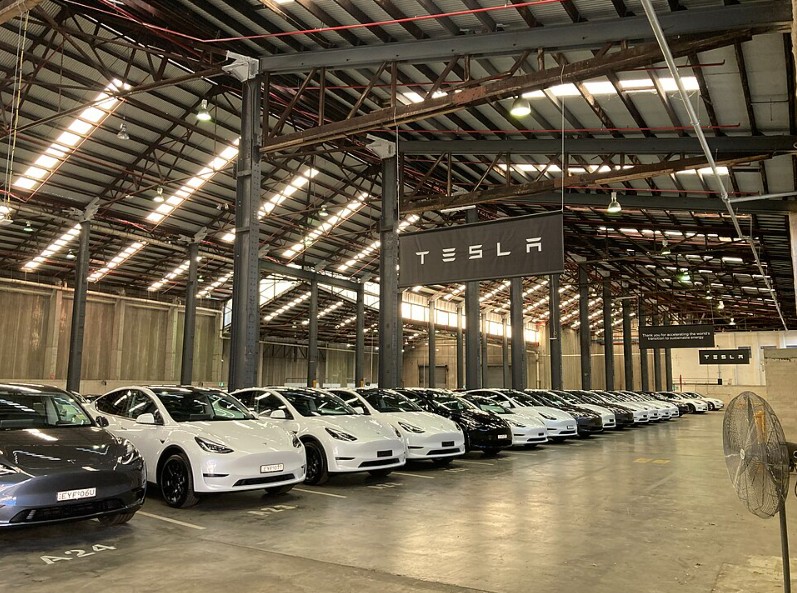
User: Nick-D
And what about cost? Studies show that while the purchase costs for EV’s may be higher, the full lifecycle maintenance and fuel costs offset these initial costs, and over the average seven-year life of a typical purchase one is expected to come out ahead on an expected value payout. Electric vs. Gas Cars: Is It Cheaper to Drive an EV? OK, range improvements, cost of ownership, check, check.
Then I have this thought that vehicle technology will change at too fast a pace, and that any purchase will quickly fall behind capabilities of new innovations. In truth, my current seven-year-old Audi suffers from the same technology fate, as items like camera functions, lane and cruise control assistance have advanced significantly in the past several years. My control screen is ancient now, I use my phone for navigation, and the audio system works just fine – so you adapt. In the meantime, I have talked myself out of hybrids as have friends and recent press coverage. Which Is Better to Buy: A Fully Electric Car or Hybrid? – Kelley Blue Book
So now I am left with the choice of buying one more internal combustion powered vehicle or making the leap as I buy new in the next two years. I think that I am ready.
__________________________________________________________________________
The Protein Dilemma: I have been trying to consume more protein in my diet, to increase muscle mass and maintain my strength. In addition to other sources of protein, I do crave a thick rare steak or hamburger whenever I get the chance, though not daily.
Here is the issue: Ruminant meats like beef and lamb have the highest net CO2 emissions per gram produced and in addition drive deforestation and biodiversity loss (e.g. across South America). Plant proteins and alternatives can cut GHG emissions, land use, and water consumption dramatically. For example, chickpeas emit about 1/20th the GHGs of beef per kg of protein World Resources Institute. Sadly, I am not a big fan of beans or lentils. While still more resource-intensive than plant proteins, some animal sources have lower environmental costs: Poultry – ~85% fewer GHGs than beef per kg of protein Pork – Slightly lower emissions than beef, but still higher than plant proteins Farmed Fish – Lower emissions than beef, but still higher than many plant sources Chickens have a much lower Feed Conversion Efficiency (FCR) than cattle — they convert feed into body mass more efficiently, so less feed (and thus less energy) is needed to produce the same amount of protein.
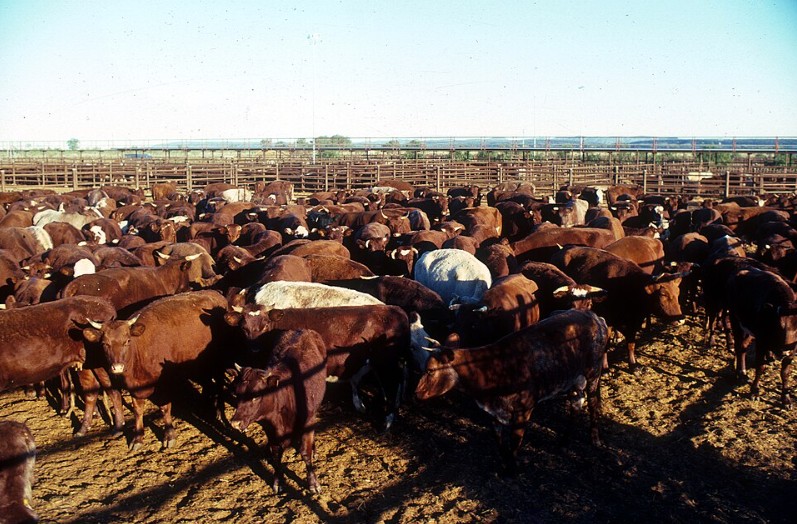
Photo credit: Malcolm Paterson
I can also convince myself that the conditions of animal welfare in the beef, pork and chicken industries must also be improved, though a losing battle within industries that compete on efficiencies of production. What a world we live in. Through research I learned that some beef is produced through pasture fed sustainable farming, both here in the US and in countries such as Argentina and Uruguay.
So, I will remind myself to lean towards chicken or fish meals and I do when available, though an occasional Omaha Steak, especially prepared through a holiday cookout, may remain on my menu. I would like to believe that I am informed and self-limited, at least to a degree in my beef consumption.
________________________________________________________________________________
Amazon, what the heck: I don’t remember the exact date of my first purchase from Amazon, but it was shortly after they started their online bookstore in 1995. Thirty years later we have Amazon Prime, and any item in the universe can be ordered through the Amazon site, directly from them or through a reseller. Need a book, need a sparkplug, need shoes, how about a replacement gasket for your bathroom faucet? They are all just a few clicks away. Our purchases have become frictionless.
Amazon went public on May 15, 1997, at an initial public offering (IPO) price of $18.00 per share. Amazon’s market capitalization has grown from about $438 million at its May 1997 IPO to over $2.8 trillion today, representing a staggering increase of over 6,400×. This monumental amount of wealth created reflects its transformation from a niche online bookseller into a dominant global e-commerce and cloud computing giant. The growth of Amazon has landed the founder, Jeff Bezos, as the third richest person in the world. History of Amazon – Wikipedia
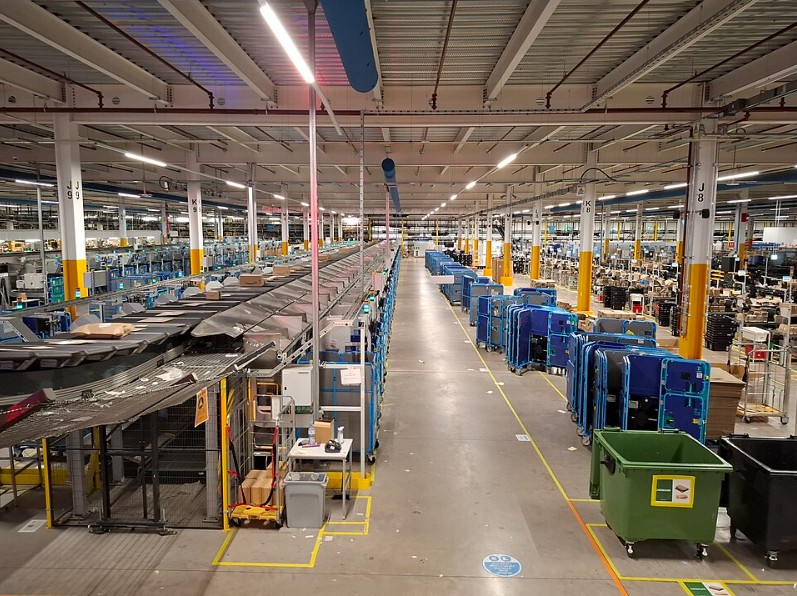
Amazon procurement center – User: Auledas
Today, Amazon relies on algorithmic dynamic pricing, loss leading, and price matching to undercut competitors. Because competing solely on price with Amazon is difficult, many small businesses adopt specialized survival and growth strategies. These include selling unique, specialized, or custom products that aren’t easily commoditized by large manufacturers or attempting to drive organic traffic to standalone websites using platforms like Etsy, Shopify or Squarespace to bypass Amazon’s heavy platform fees and regain control over pricing and customer data.
Over the years I have benefited from cost efficiencies in the price of the products I have purchased. What is wrong with that? There is an independent bookstore located a mile from my house. I can go in there and typically will have to order any book unless it is a current best seller, wait a week, and return for pick up. Or I can order through Amazon Prime and receive it on my doorstep. And this quirky little bookstore is destined to soon go out of business.
AI assisted searches, gas powered vehicles, beef purchases on demand, Amazon products; I live a very convenient life. Am I just swimming upstream against the tides of technology and progress if I make a conscious attempt to change the intentions of my purchases. Will many other buyers do the same? Or can I make small, informed choices to steer my footprint in the right direction, along with everyone else?
I can think of several places to start.
