Chapter 1, Introductions Terry, she was always in a hurry to live her life; she loved to pause each morning with a home brewed latte, read great books, study, sew, and meditate, but couldn’t sit still for very long. She found a dog and named it Derry, a miniature Irish Setter, a Doodle. Derry was suited for long morning runs; he would wait patiently at the side door for her to dress out; excited to roam aimlessly off leash, though he was trained and safe with Terry close nearby on trails and city paths Terry was smart and frugal, she sewed her own clothes and cooked meals from scratch, pennies saved to plan for a quiet life after a career which availed her the chance for travel across the world. It wasn’t just a dog that she nurtured; many people intersected with her rich life, great friends near and far, partners who she supported (and adapted to), a family who depended on her. Some years ago, she met a man, Lee, entirely through fate and compatibility.
They came from different worlds in age and background and demeanor. Lee was reserved, an introvert, accustomed to putting off bold adventures, practical to a fault. He grew up in the city and carried a cautious outlook, though oddly mixed with an inclination for risk taking and rule breaking, contrary to the crowd. He worked as a research scientist at Caltech, on loan to the Jet Propulsion Laboratory in Pasadena California. His specialties were risk assessment and NASA mission planning; the work fit his demeanor. Immersed in project work he could retreat and be productive. Tuesdays were the best day of the week to stay on routine. On that fateful Tuesday there was a group visiting – from IBM, and the attendees were full of questions and brimming with bright-eyed interest. It was all interesting to him as well. He was sitting at a side table with work on his mind, but he was also an observer, and who could be more different than this slender but strong woman, perfectly dressed and at ease within herself, with the soft southern accent. Maybe she wasn’t at ease with herself, but she sure didn’t show it. “You have a southern accent, and you live and work in the California Bay Area?”
He always wanted a dog, to name Spot. “Tell me about Derry”. She was warming up to him, an animal lover like her. From the very start he knew that he couldn’t quite compete with her talents and intellect, and that deep down and oh maybe he had discovered plutonium for the first time. Rare and valuable. “I could run with you, that’s what I do”. “I do too of course” she replied. “I know, I overheard you talking about running with Derry”. The tour group stayed for the night, and they invited him to join in at a softly lit terrace restaurant; the air was heavy and cooling just a bit as the sun retreated. Neither of them was a big drinker, they liked to nurse their drinks, he a light beer and she (of course) was an expert on wine. Sitting together that first night he would take her lead and ask her to order a glass for each of them. There was no sense in trying to contribute to the wine choices; it was easier to just stare at her in action. And listen to a short story of her life. “Can I see you again at breakfast? Or maybe we could meet for an early morning run, that would be nice.” She didn’t know this man – a stranger still, but something about his eyes, his attention, the way he deferred to her gave her comfort that this was a small adventure worth taking.
The next morning, they met at the hotel door with an awkward hug and ran out into the wide, quiet boulevards. “Please let me lead, have you ever seen the Rose Bowl up close?” As they ran along there was an odd familiarity with the large estates lining the way, picturing the endless bright, cold, sunny New Year’s Day parades that filled this route. A right turn down a narrow neighborhood street, cars start to stir from narrow dark driveways, the sidewalks bent up and over the roots of high leaning oak and eucalyptus trees; watch your steps. California architecture in its preserved, though somewhat faded Victorian and Craftsman styled glory. They crossed a wide intersection and suddenly a large oval loomed ahead, one hundred years old and counting, welcoming in red script that you are here at the Rose Bowl. She ran at a fast pace for her small frame, he thought he could win a test of endurance, but he was happy to lag and lead across streets as he lightly touched her arm like a rudder to steer her safely. Time stopped – and he thought to himself right then, “you and I – we are the same…” They wandered back up to the hotel, lingering to talk, dressed and said goodbyes after breakfast. It was unspoken but they each wondered, when will I see you again?…
First time together —Sense a forward connection —Possible as two

Chapter 2, The road north After that first encounter, they fell into a happy routine of text messaging, emails and phone calls. Discovering an undeniable attraction and mutual commitment. Terry made friends at the drop of hello, while Lee held back to watch and listen and consider. Lee felt like he had missed out on embracing sudden opportunities throughout his life. This time would be different. Both came from relationships where positive support was limited, where they couldn’t be their true selves. It was an opportunity to look forward to finding their way together. After a few long-distance visits and several months later, the opportunity presented when they both moved to the Houston area; he began working in Clear Lake, and she lived in the city.
They spent that next year close in time and place. Together every weekend. Saturday mornings consumed with long runs crossing through the city streets and extra time spent lingering over breakfast. Sunday outings to city parks, forays down to gulf beaches on cool winter mornings. The seasons in south Texas turn slowly, and then suddenly. Dry hot endless summer days hold the heat in your bones; the slanting fall sun strains your eyesight. A false early winter, November briefly returning to summer, and then finally the earth and skies relax their grip, and the nights lengthen deep into December. At the start of a cold wet winter, they moved into a rented bungalow near the medical center. He thought “I don’t even know this person, and we are suddenly sharing our lives together.” Telling no one, not family or friends, and reveled in their secret, private world. It is hard to keep separate from their social circles that surrounded them when spending so much time together, but they didn’t care. Quiet holiday celebrations followed. January disappears in an instant. Spring hastens to return in February, and winter expired in time for the March pollen season. Now suddenly in high summer a full season together. Their jobs were interesting, paid well, and truthfully uninspiring. How many of these work and weather cycles do we have within us as a couple? Temporary house rentals do not make a home.
Another full year together. Finally, it was hot and still again, late July, in that second year of their relationship. Around the time of the apex as he liked to call it, when the morning sky dims a bit and the shadows of the trees begin to lengthen, imperceptivity at first, and then one day the southern angle of the sun asserts itself, still blazing hot days and nights, the promise of another fall still far on the horizon.
“Let’s quit our jobs and start our own business, how hard can that be? And move far away.” When he was much younger, he dreamt about escaping commitments to start a new and anonymous life. Save up cash and buy a car and drive out of sight to a new place, no one could track him. Now he has a traceable phone and credit cards and the whole concept of disappearing seems so made up. Or is it?? How could they do this?
The plan was to escape, to simply pack up and drive away, initially toward Virginia – Terry had family there from way back. She was the second of four children and the only one to leave her hometown. Her father was a master electrician who turned to farming in early retirement. Harder work for sure and it often paid less for years on end. He kept 180 acres in hay and seasonal soybeans, along with a dozen head of cattle. She learned to fix fences and ride horses at a young age; milk cows and run a plow. Lee grew up in a city up north, all concrete and asphalt and telephone lines and narrow streets. His dad was a mechanic and builder of small backyard projects. Played every sport that existed and just an average athlete in all of them. Good with his studies though a grinder in all things academic. Curious to read and learn. Somehow though he discovered an early love for nature and kept every small animal possible in the tiny yard of his childhood home. He did not mind outdoor labor, would work in a nursery or as a landscaper if he could start over. Although he was hardly mechanical, he didn’t mind trying. Said it took three times as long and ninety percent right and half the cost to do it on his own, and he learned along the way.
Together they bought a sprinter van and wandered out of Houston with few possessions and few cares; they had each other. Apps to guide them. An early stop for coffee and breakfast, with a music playlist that leaned toward alternative songwriters, keyboard and piano, the plan was to avoid all current news, and politics especially, watch the weather, talk, and let the world pass by. The first day was spent ascending on narrow state roads leading east and north, winding through the Piney Woods before leaving Texas behind. Don’t look back. A restless night in Hot Springs Arkansas. They were so good together, but sleep eluded as thoughts raced through their minds, who are we? Morning brought a short, sweet run alongside, time spent lingering and then the road was upon them once again. These places seemed familiar from past lives, as the closed-in mountain roads opened to a wide blue sky, endless river bottom fields of soybeans, corn and cotton as they crossed into Tennessee. They talked of childhood dreams and temporary freedom from work, old friends and family memories. Time to take stock and plan, listen to each other and follow the road for two more days. How to sustain a new life. This wasn’t a trivial exercise, with properties and investment accounts and IRA’s and stock options and some disposable income, maybe enough for a year or three if they were prudent.
The road together —Future possibilities —Embrace adventure
Find where to settle and work remote and lose themselves in a new place. Early on they settled on the possibility of a life in Maine or eastern Canada. There is a need to be a close couple and still retain independent interests, many to be sampled, how long to be on leave from structured society, and when to re-apply structure. “Let’s give ourselves a few months to stay unmoored from the past and future, explore, play and plan.” He was the planner; she was the dreamer. Take those dreams and fit them to size. Find a twelve-month rental somewhere remote, while they begin to plan for a life after this life.
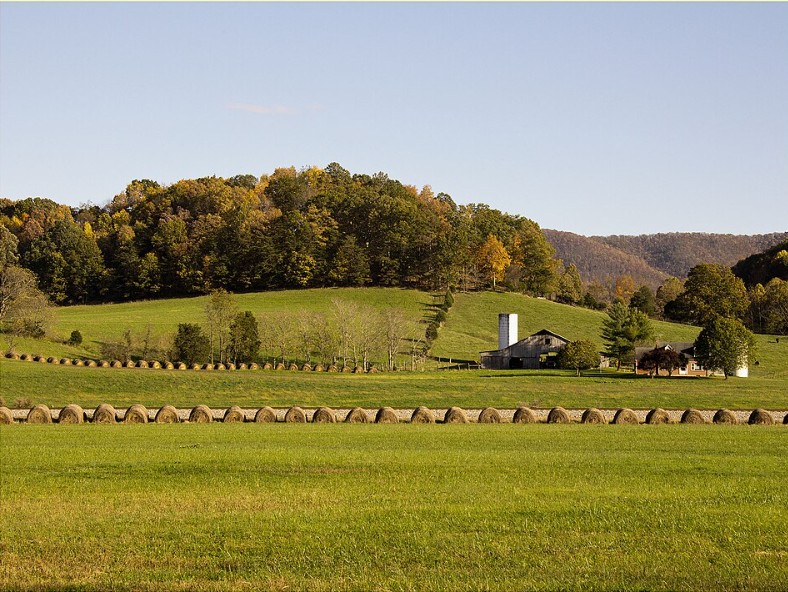
Straightway through Nashville and Knoxville across and up through the teeth of the southern Appalachians. This part of the country was once wild and remote before it was discovered by hordes of hikers and campers and fall foliage tourism. Now in the end of summer shoulder season there was a bit of privacy and peace to be had. They stopped over in Stewartsville, just east of Roanoke, to check in on Terry’s family; this whole journey would be a shock to them. The family home is set on the edge of a sprawling farm, narrow, winding country roads, a church, a Dollar Store, two local eateries, and local farm supply businesses. Beautiful, peaceful countryside supporting productive lives.
Attribution: jpmueller99
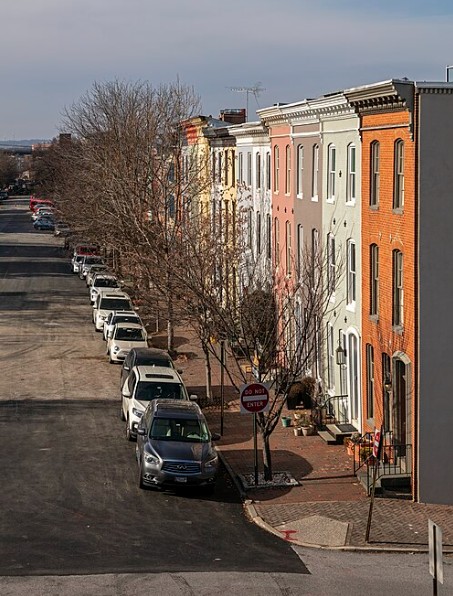
After all these years her home and lifestyle seemed confined; perhaps that always comes with age and life’s adventures. After a brief visit they decided it would be best to move on, north and east, to his old house, not that far away but in a different world from rural Virginia. Narrow hills, cobblestone streets, row houses in the Federal Hill neighborhood within south Baltimore. Childhood friends had moved on and the place reinvented, it attracts tourists now to the harbor attractions, though the family home had remained unchanged.
Attribution: Acroterion
A brief stop, introductions and getting to know you, two days were more than enough for family time.
Keep driving east through the rolling mountains of Pennsylvania, then north through Scranton and up into New York State. Don’t stop now, travel the Hudson Valley and then further east through New Hampshire, finally north again into Maine, coffee and pizza fueled them, early morning runs and dark nights tumbling to sleep together. Time accelerated in a sense. The morning air was heavy and still moist, though not oppressive. Each day they run side by side as he held her by the crook of her arm, guiding along to bond close. A final sprint and they laugh with the effort, each day together. The eastern forests are still in full bloom, growth has slowed, and they stand quietly for a few more weeks before they mature into fall.
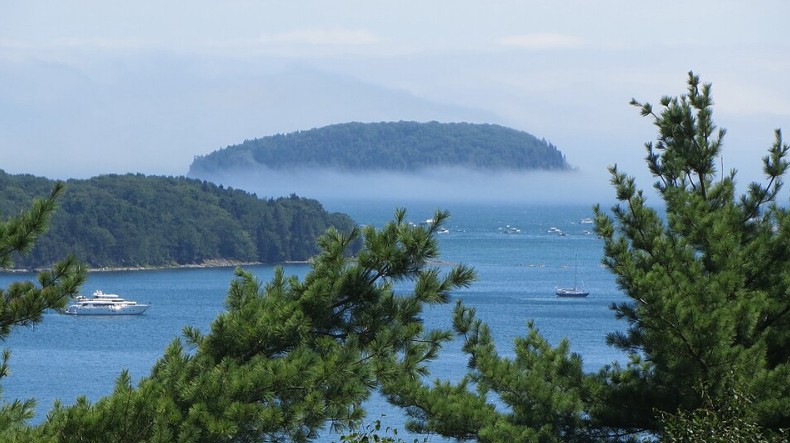
The initial destination was Acadia National Park, a place they had always wanted to visit. They rolled in late one afternoon to Southwest Harbor, carrying a sudden hunger for local caught fish and sourdough bread. Linger by the harbor walkways and promenade. Watch a young couple in close discussion, a family with dog in tow, young locals immersed in social media, the sun bright still but leaning hard to the west. The air is cool and almost dry, as a fine mist settles in off the coast.
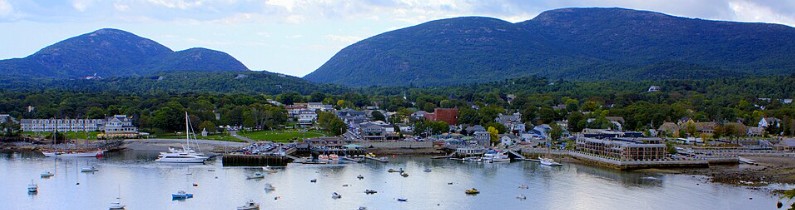
Attributions: guyvail, Brian W. Schaller
Just down the road, “Acadia Cottages” catch their eye, rustic, quiet, private, serene with wood framed beds and down comforters. A simple quiet room will be just fine for a few days. This is what they wished for during those many years of rushed travel and work and meetings and obligations. Terry makes a food run, she can make a salad out of anything, with fresh fish to be broiled, bread with olive oil and a bottle of wine. A glass of wine, two, they are in training, but this fine evening is a chance to settle in and talk of the past and future without restrictions on ambition. He watches her carefully, her long light fingers know their way, simply and wonderfully presented. They linger over a long quiet dessert and finally retire for the evening, content together. Now that routine is fully stripped away, backwards wake-up math is no longer needed.
Chapter 3, Bar Harbor Through twelve or more millennia nations of the Wabanaki, or “People of the Dawnland” were the original caretakers of the land where the sun first touches North America*. Spread across present day Maine, New Brunswick and Nova Scotia the primary nations were the Maliseet, Micmac (Mi’kmaq), Passamaquoddy, Penobscot, and Abenaki peoples, with thousands of members maintaining distinct tribal governments, cultures, and languages.
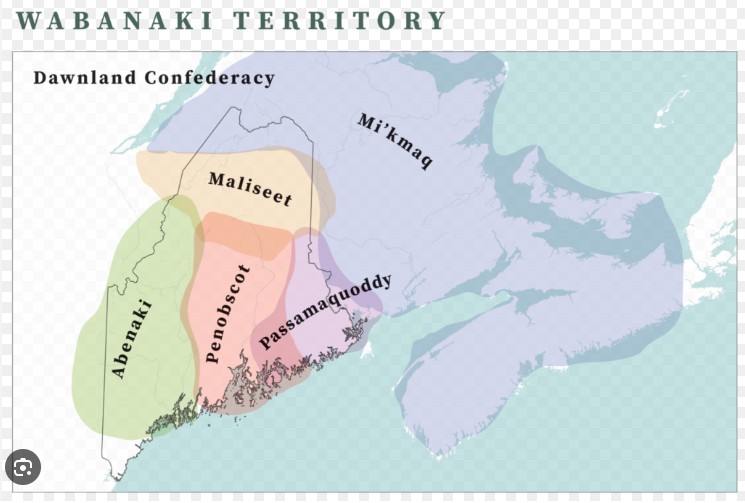
The waters and marshes were full of fish, clams, oysters, and lobsters. In the fall, spawning schools of fish moving with determination from the oceans to freshwater sources and provided a large bounty; salmon, herring, and smelt migrated each year. Sturgeon roamed the larger rivers and estuaries. There was moose, deer, beaver, seal and abundant bird hunting. The Wabanaki actively altered the environment by cutting undergrowth and starting controlled fires to provide a habitat for the animals they hunted and the plants they harvested. In the southern and western areas, including some near the Kennebec River but mostly farther south, Wabanaki also planted corn, beans, and squash to supplement year-round hunting. In the northern and eastern areas, they were almost fully dependent on hunting and gathering. Rather than living in a single location, they followed the food seasonally, carrying their houses with them. Wabanaki Sustenance and Self-Determination, by Jillian Kerr – Wabanaki REACH Home – Wabanaki Alliance
What did those who lived on these lands believe lie beyond the sunrise? We can’t ask them now; the history of Maine has largely been written by European explorers, settlers, their descendants and present-day researchers. An early historical record did not exist in written form, and is now reconstructed from artifacts, archeology digs and word of mouth traditions, passed down through generations. One imagines the seasonal hardships and ingenuity that shaped the progress of these peoples. They were free and perhaps content in the sense of the opportunities and independence that they were afforded. And then suddenly these established cultures were tipped over, forever.
When the Europeans arrived in the area, they found lush stands of fruits and nuts along the coasts and waterways, but more dense forests inland. A pre-colonization population of tens of thousands then rapidly declined due to a century of conflict and disease*. Despite enduring these significant traumas, they continue to practice their culture and protect their sovereign rights, through to present day Maine and the provinces of Eastern Canada.
Terry and Lee did not know of this long history of the lands, and the peoples, upon their arrival in Acadia national park. The etymology of the park’s name begins with the Mi’kmaq term akadie (“piece of land”) which was rendered as l’Acadie by French explorers and translated into English as Acadia. Acadia National Park – Wikipedia Wabanaki Nations – Acadia National Park (U.S. National Park Service)
After that restless first night on this historic island the sun broached early through the side window, rousing them awake, lingering and groggy. Awakened twice in fact before a quiet morning run to the waterfront, then up to the trails that lead to somewhere, they didn’t care, tall stands of trees, weathered rocks and sandy dunes. Touching and talking along the way. They paused together on the small front deck and talked about breakfast.
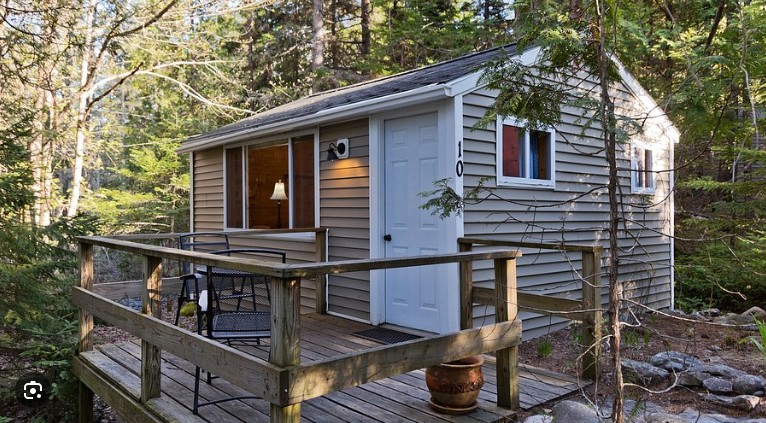
There is an interesting couple in the next cottage, with a golden retriever and otherwise a mirror image of them. Shouts of hello and introductions and cautious exchange, neither pair wishes to break their isolation; why they came. The news tries to intrude on their life; a flood, a fire, a hearing, a shooting – this is all a repeat of last year’s news, they will make their own stories. Let’s go look at places to live, Terry says, and they do. The rustic look remains expensive, but they don’t want for much, there is no new to be found here, small and clean will do just fine.
Their first local purchases were staples and extra blankets for the cabin, two weeks’ worth while they sort out living arrangements. In the short term it is not a bad way to live…They lingered again the next morning, with a short run; he ran an extra loop along the waterfront and explored the start of a rising trail, returning to wake her for a second time. Waking up twice is a new habit. Through the window, the bright waning moon danced with Jupiter on the early horizon. Coffee with a biscuit and they set off on foot with a map and light backpacks; the sun is now fully risen. Seabirds sail low across the bay; a fishing skiff escapes its mooring and moves quietly around the north side of the inlet and out of sight. They start to get the lay of the island, small inns and cabins scattered about, what passes for a general store and the coffee house / bakery, and a few other local storefronts not yet open for the day. They wonder how many of these stay open through the long dark winter ahead. This is a postcard or a temporary mirage; they have not yet experienced even a full season in this land to make a life. Next up is the task to acquire are proper hiking clothes, trail running shoes, lightweight boots, two slightly used bicycles and a pair of kayaks. What better way to explore, days two and three on foot, on bicycle, and the rest of the week by kayaking.
Day three brings a short diversion into the hillside trail system; there will be much more time to explore this area, but a taste of the inland trails is on their mind. Island birds circle at a distance and dart through the close in tree boughs. Common warblers, thrushes, blackbirds, sparrows, a northern goshawk; there is a lone loon calling from a small pond across the clearing. The deer and fox are hiding quietly while brown tailed squirrels’ rustle through the undergrowth. They cross paths with a small turtle making its way from its birth home, away on its own grand adventure. It will take time and chance to spot the full breadth of wildlife; they won’t reveal their places so easily. More sounds ahead, humans of course, nods and helloes and then they pass back into the silence of being alone. After an hour or more they stop for a packed lunch, the grass is still high; they settle in. They don’t really know what they are doing or where to go, though the map guides them purposefully in a long loop. More walking, a bit anxious now, and suddenly somehow, they cross over a small gravel road and are back to the start, having navigated well a first tentative outing. The solitude of being far away and well alone forces a type of closeness that they don’t mind, they may one day tire of constant time together, but they embrace it now, after many years of anticipation.
Their first long hike involves a drive to Ocean Path, along the southeast side of the island. This is where they fall in love with the island and all that it has to offer. Heading out early they start at a sandy beach and wind their way up and down across granite cliffs. A hard work out that doesn’t explicitly involve running. It’s all good to exhaust one’s elves in the bright sun and salt air and cloudless sky, a six-hour hike with a backpack full of food and drink, he always comes prepared.
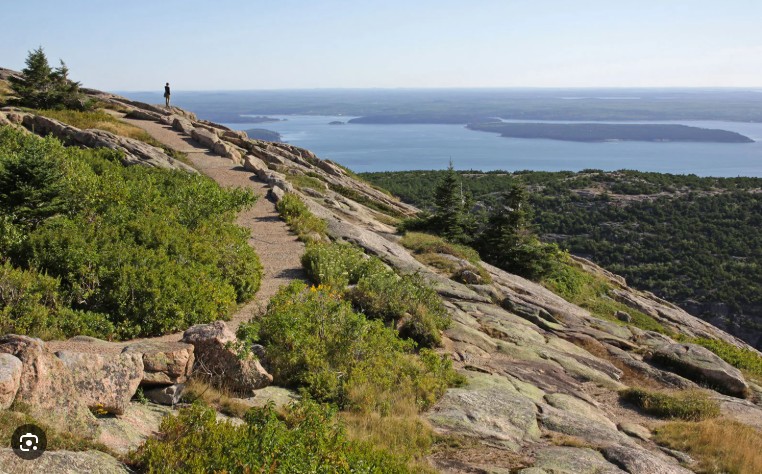
At some point just off the furthermost part of the trail, they finally find quietude, and solitude from other hikers. They remain desperate to be alone and apart, it sustains them. She scrambles ahead to scout the route. A slow ride back with a stopover for crab soup, bread and cold drinks, hot showers and together in deep sleep.
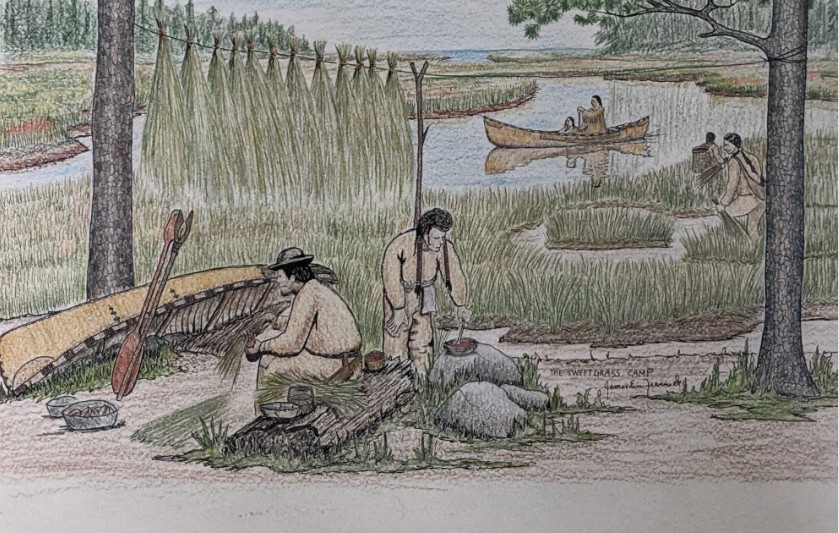
“The Wabanaki traveled to the island in birch bark canoes to hunt, fish, gather berries, harvest clams and basket-making resources like sweetgrass, and to trade with other Wabanakis. They camped near places like Somes Sound.”
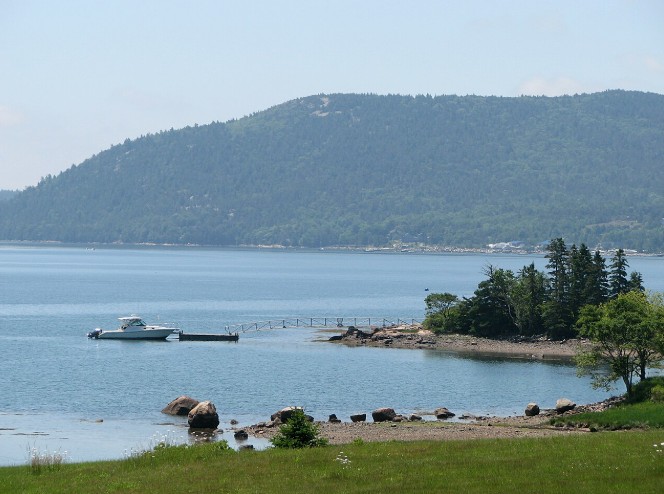
On day four they put in the kayaks at Somes Harbor, this should be an easy trail paddle, sheltered from the main strait of Somes Sound, a chance to test their technique and set up and paddle stamina. Scores of small sailboats and motorboats are already out on the water. Stay close to the shoreline, it doesn’t come naturally just yet but is a small safe start. The aim today is to explore these waterways when the day is right, and the tides are in their favor. He is used to paddling alone and running together with Terry. Today he carefully leads the paddle across the main straight and through a dozen small inlets. The water is flat except for the small wakes that boats discharge and drift across. The sun is high, and white clouds skip across the sky as the wind starts to rise. A lone cormorant drifts across the water in front of them; it prefers to hunt alone. Kerchunk, kerchunk the small waves slap against their sides and it takes some effort to hold straight. South, they paddle around the tip of Bar Island toward the sound proper and then due east to Abel’s Marina and Boatyard. Abel’s Lobster calls them in for lunch. Abel’s Lobster “Arrive by boat or car, either way we will be serving the freshest lobster”. Yes please. Full stomachs now. Thirty minutes out becomes forty minutes back against the northwest breeze, it takes some effort to progress, heads down and silent now, working steady. In time the landing re-appears, they guide into a hard sandbar, and then tip over before they can dismount, crawling sideways with no shame. Well, the whole endeavor takes some practice. And today with a focus on form the exploration was limited and bisected by a perfect lunch. A hike and a kayaking, they were just touching the toe of this large corner of land.
A week stretches into two, and then four; finances are not a problem in the short-term and the rhythms of late summer capture them. They test several more of the day trails, Acadia Mountain Trail, Wonderland trail to the South, and to the far east they tackle Precipice Trail, and walk through the areas that house full-time populations. Bar Harbor (expensive), Bass Harbor, Isle Ford, Seal Cove, Seal Harbor, Sorrento. Seasonal cabins and year-round houses, maybe half of those are second homes, smaller places for the locals who live off the tourism, and some like themselves that wish for a remote change of life. They present themselves as long term tourists and in some sense they are.
September 4th, the day after Labor Day, suddenly quiet in the mornings, at the coffee shop and on the roads, welcome to late summer, time to find a house if they plan to stay on. Mary Jackson was raised in a small town in coastal Maine. After college she spent some time in retail sales and then decided to obtain a real estate license in her spare time; it turned into a part-time career. “Do you know what you are getting into?”, she said with the trace of a smile on her face. If you can afford it, not such a bad gig, you can rent the house out for four months and pay off a full year of mortgage. And then travel if you like and return in late fall.
The house was built in the 1940’s and showed its age, bleached red siding, squarely set rooms, back decking with a partially obstructed view of the bay. The original hardwood floors could be refinished, the two bathrooms needed work, and the kitchen / sitting area was functional at best. It could be a two-year project to restore and upgrade it. He was good at minor repairs to minor appliances, but the scope of this was an ocean beyond his experience. Well, why not? Reprieve came in the form of a local contractor, Frank Seymour, who grew up on the island and knew its secrets. $75,000 budget to restore and upgrade a small house, have at it. And it turns out that this house had a history. It was built by a boat captain who fished for cod and lobster every year, based out of Portsmouth but retreating to the island every offseason. He married a young local girl, a teacher whose family had lived on the island for generations. Frank was wary at first of these short-term residents. Terry put him at ease as she did all others, helpful and friendly and interested in who he was and what he had to offer.
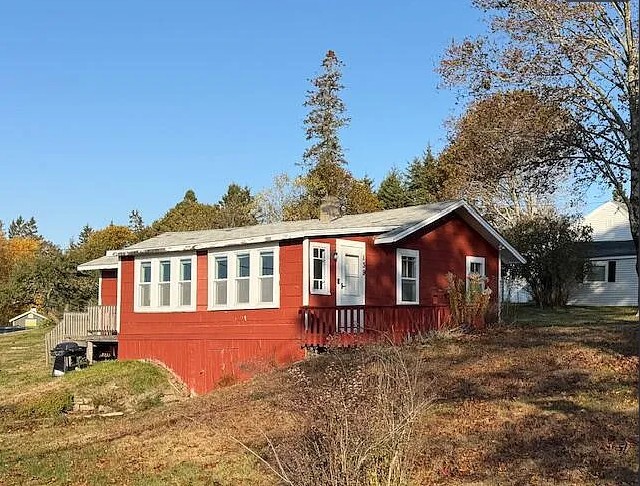
Attrib: Harbor Drive Harbor Drive – The Knowles Company
They managed to occupy the house for close to a week, accumulating a few salvaged pieces of furniture, a steel bedframe and “slightly” used mattress. Personal possessions included their bikes, kayaks, various trip supplies and travel clothes. A tiny inventory that could be pushed into one corner of the admittedly small main bedroom.
On the approach of the autumnal equinox, one more local destination is in their sights. Travel toward first light. They have heard about this for many years and have seen the stunning photos on several occasions. Fitting in with the tradition. Nine miles due south of Bar Harbor on local roads, a small parking area marks the trailhead. Acadia National Park – Great Head Trail – Maine Trail Finder
Backwards math is required once again. Sunrise at 6:20 AM, arrive thirty? Minutes early, a three-quarter mile hike (in the dark – headlamps required) to the Great Head overlook. Scratched out on a pad of paper: 6:10 – First light 5:50 – Arrive at Great Head 5:10 – Begin Hike from parking area 4:30 – Depart the house. 3:45 – Wake up, linger and dress, pack breakfast and lunch Lee always builds in a bit of a safety factor, what engineers do. And off they go. Summer has ended but a few travelers linger with a small mix of locals on this same short journey. Happy to share the experience, we are never truly alone. And there it is, the sun rising over the coastline of Newfoundland. Perfect today.
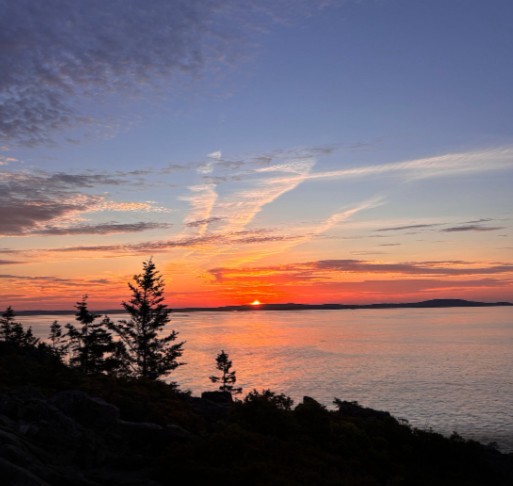
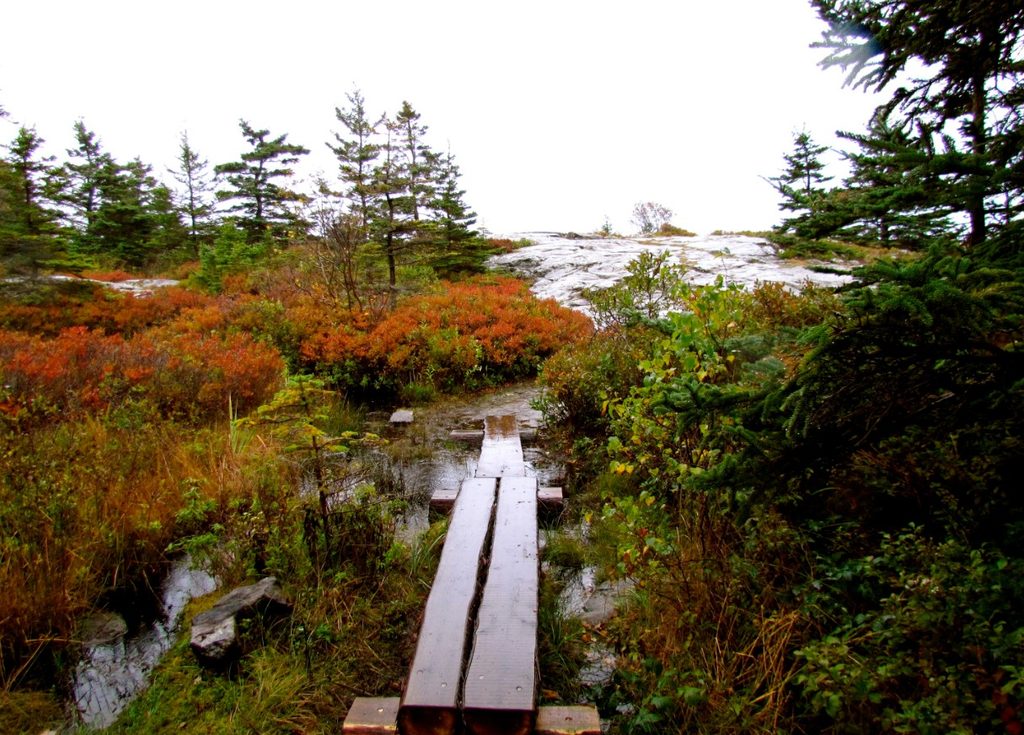
File:Acadia National Park (8111135619).jpg – Wikimedia Commons
.jpg#filehistory)
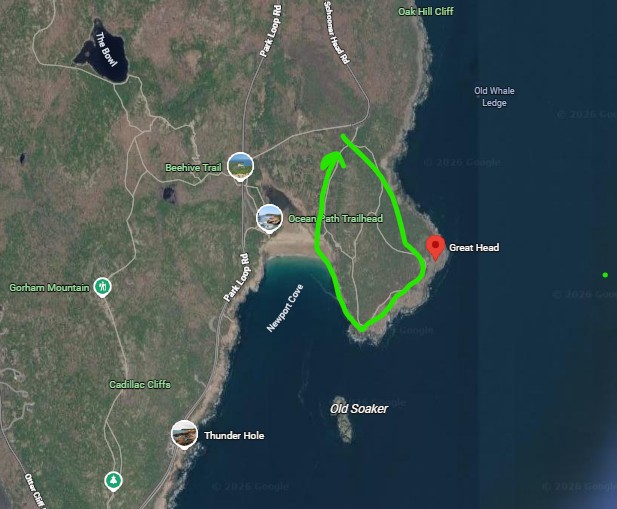
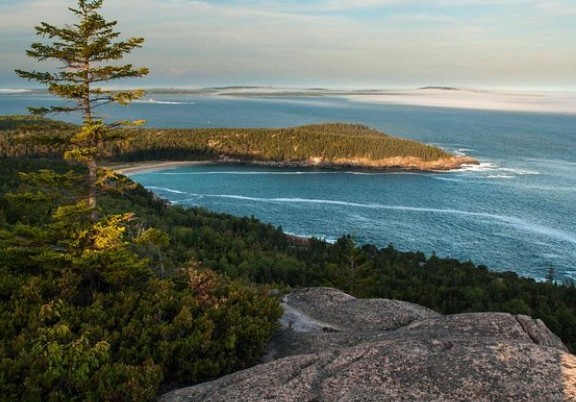
Acadia’s Ocean Path Self-Guided Walking Audio Tour 2026 – Bar Harbor – BOOK NOW
Pictures and breakfast and spread your arms and think about all that have come before you to this place, who lived and visited and settled, the lives they lived and the futures they envisioned, as are we. The returning trail took a loop south and then back northeast past Sand Beach, make a morning of it, they had nothing but time.
Look east, the sunrise —Past and future in your eyes —Today, tomorrow
A day or two more spent locally in preparation. Locally sourced clam chowder prepared from scratch.
Ingredients:
- Bacon, chopped and cooked with aromatics, for taste and added
- Butter
- Aromatics: yellow onion, celery, and garlic.
- All-Purpose Flour to form a smooth base
- Clam Juice & Chopped Clams, fresh or canned, fresh lobster if available.
- Half-And-Half: This is the perfect choice here as it isn’t as heavy as heavy cream, but not as light as milk, bringing the ideal amount of fat to an already rich dish while also having enough to stand up to create a thick chowder.
- Vegetable Broth:
- Peeled and chopped Russet Potatoes:
- Herbs & Seasonings: Thyme, bay leaf, chives, and both salt and black pepper.
- Oyster Crackers, a must have
Cook the bacon and use the rendered fat to create roux. Heat the bacon in a pot for about 5 minutes, until browned and crisp, then remove the bacon with a slotted spoon so that the fat remains. Roux is a mixture of flour and fat cooked together and used to thicken sauces. Roux is typically made from equal parts of flour and fat by weight.
Add your butter into the same pot and stir until it is melted and combined with the bacon fat. Toss in the onion and celery and cook for about 5 minutes. Add the garlic and flour, stirring as it cooks, until the garlic is fragrant and the flour has darkened a bit in color.
Add in the liquids: clam juice, vegetable broth, and half-and-half. Whisk this mixture until the flour base and liquids have combined into a slightly thick chowder base. Next, add the potatoes, thyme, and bay leaf and allow the mixture to come to a boil. Then reduce the heat and allow the chowder to simmer for about 10 minutes until the potatoes are tender. Add the chopped clams / chopped lobster and cook for 2 minutes, then season the chowder with salt and pepper to taste. If necessary, add half-and-half to adjust the thickness of the chowder and remove the thyme and bay leaf for serving. Divide the chowder among individual bowls and top with bacon, chives, and oyster crackers and desired. Best Clam Chowder Recipe – How To Make Clam Chowder
And so, as work began on the house in September, they decided to take a long hiking and kayak excursion north to the St. Croix River, and then further by car to Quebec City. They had some practice now with the kayaks, but still it was a dangerous sport. Up here one could not pick the ideal weather, the tides pulled, the waters often choppy and sprouting unexpected whitecaps. Experience comes with time, one quickly learned. With some luck in a few weeks, the dusty / dirty part of the renovations would be complete, and they could reoccupy as semi-squatters in a small corner of the structure during the subsequent improvements. Winter was approaching, materials were sourced from downstate, the contractor had never taken on a project of this size and scope; what could go wrong…?
________________________________________________________________
*Although there can be no exact figures, it is estimated that there were about 75 thousand people in this area in 1500 with about 35 thousand of them in what is now Maine. Even by 1600, the population had declined, most likely due to European diseases to which the Wabanaki had no immunity. The Popham colonists saw Wabanaki everywhere they went, but the 17th century would see a large drop in the population with a 90% reduction in many places due to both death and displacement. Entire tribes were driven to extinction. The years 1615-1619 are known as the “great dying” and over 50% of the population is thought to have died in those years from European diseases.
The border established between the United States and Canada after the American Revolution split the Wabanaki homelands. The confederacy was dissolved around 1870 due to pressure from the American and Canadian governments, though the tribal nations continued to interact in their traditional ways.
Chapter 4, away to Quebec City
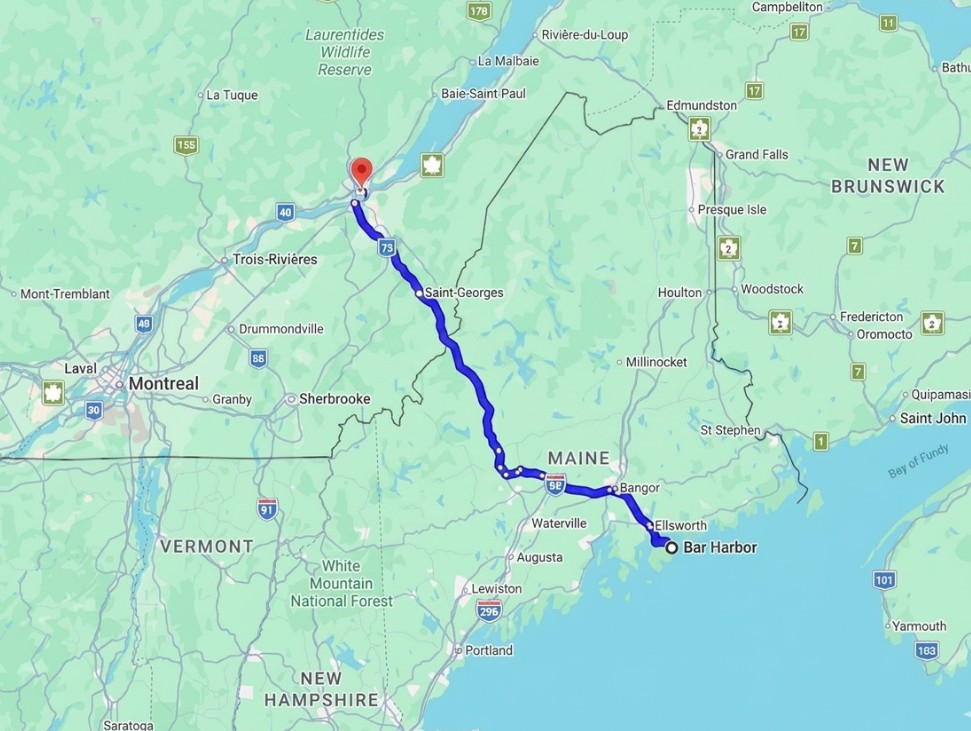
Heading in the general direction of Quebec, they drove northwest to Robbinson and the St. Croix Island visitors center. The island is in the heart of the traditional lands of the Passamaquoddy, who according to oral tradition, used it to store food away from the dangers of mainland animals. Cartographer Samuel de Champlain established the first European settlement on this small river island in 1604. In 1608 he returned to North America to establish a permanent settlement, founding the city of Quebec Ontario. Here in St. Croix, visitors are prohibited from the island to protect historical remains. Otherwise, it would make a great kayak destination.
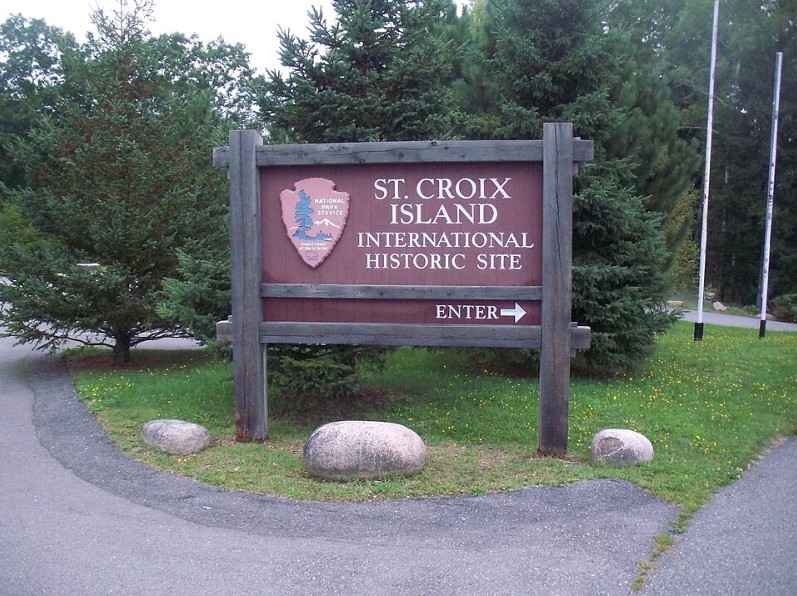
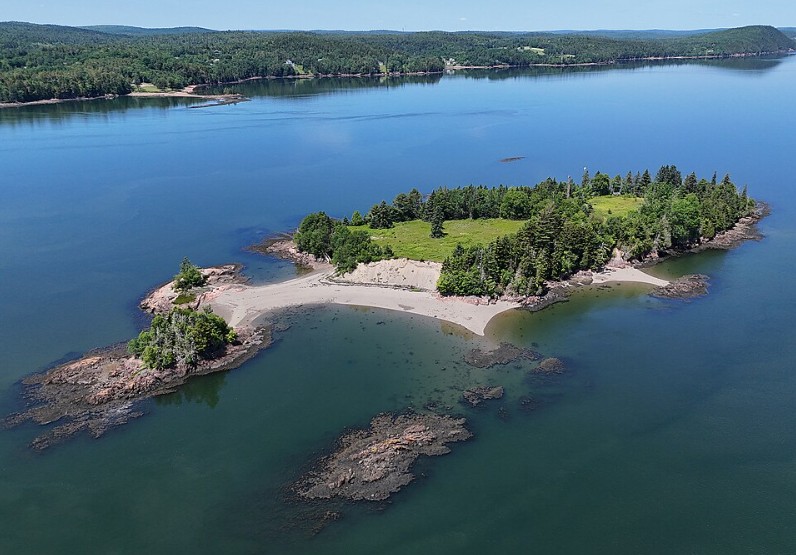
Attribution: SarekOfVulcan, Quintin Soloviev Saint Croix Island, Maine – Wikipedia Saint Croix Island International Historic Site (U.S. National Park Service)
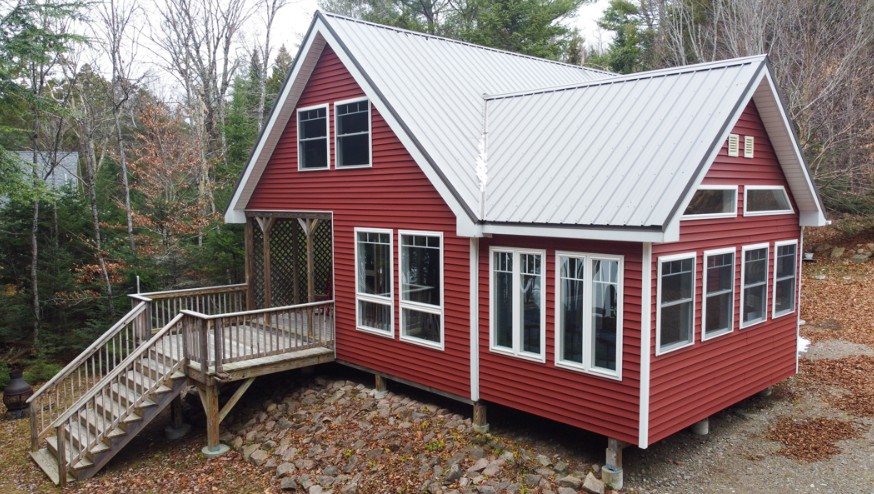
After touring the visitor center, they secured a cottage in town for the night in nearby Robbinson. Quaint described the accommodation, log cut ceilings, plank floors and sturdy square furniture. At that point something came over them. They shed their athletic clothes in favor of hiking pants and layers of outerwear, their hair grew unwieldy, stubble appeared in places never known to be. They stayed clean but less polished, and with time it suited them. Out in the heart of nature the daily chatter of news and social media was no longer important – let it go. There are ways to become more independent. Hiking and running for a start. Learning to cook local recipes, history and nature books of all forms and fashion, rising early with the sun, simple foods, alone together. It takes less resources to live like this, not poor, and yet simple. Similar to this rental in Ontario Canada. Downeast Lakefront Cottage – Robbinston, Maine
Time now for warm Blueberry Cobbler with hot coffee after a late evening meal:
Ingredients: Blueberry Mixture:
- 4 cups of blueberries
- 1/2 cup of sugar
- 2 tablespoons cornstarch
- 1 tablespoon lemon juice
- 1/4 teaspoon cinnamon
- 1/8 teaspoon nutmeg
Cobbler:
- 1 1/2 cups flour
- 1/4 cup of sugar
- 1 1/2 teaspoon baking powder
- 1/4 teaspoon baking soda
- 4 1/2 tablespoons cold butter
- 3/4 cup of buttermilk, plus 1 tablespoon
Directions: Blueberries: In a large bowl combine all the ingredients, then place in a sprayed baking dish and bake for 10 minutes at 375 degrees while you prepare the Cobbler.
Cobbler: In a bowl combine the first 5 ingredients and mix the combination well. Cut and put in the cold butter, mix until it looks like crumbs. Stir in the buttermilk until the mixture becomes moistened. Take the cobbler mixture with tablespoons and place them onto the blueberry mixture. Sprinkle sugar on the top and place it in the oven for 25- 30 minutes at 375 degrees. Serve warm with vanilla ice cream or whipped cream. And hot coffee for sure. Mimi’s Maine Blueberry Cobbler – Undiscovered Maine – University of Maine
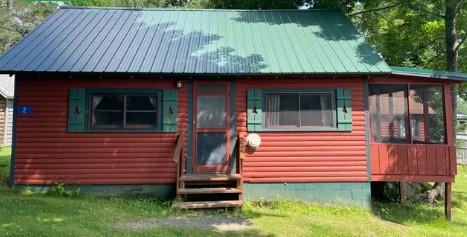
The afternoon sun was suddenly lower now; dark clouds covered the sky just above the far hills. An early winter storm approached, and like a light switch the warmth of September disappeared. A hard frost followed by another round of rough weather kept them inside for two more days, amplifying the solitude. There is a way to break up responsibilities, avoid disagreement, and row together. They learned from and appreciated these subtle navigations. As the weather finally broke fair, they headed north up through Brookton and on to Danforth, anticipating some time on the water there, before the St. Croix becomes unnavigable, for reasons of water level and coarsening weather. Rideout’s Lodge and Cottages were their next stop. Far from civilization, fishing and family retreat, the cabins were small and rustic in that identical Maine décor; a simple place to stay – if you like to spend your time outdoors. This is the shoulder season – post summer and pre-ice-fishing, and they had the run of the place, quiet and deserted. The weather warmed once more with a sense of Indian Summer, and they managed to put the kayaks in for a day on East Grand Lake. Bright sun, no wind and a warm afternoon fed adventure, moose and deer and a black bear sighting, they exhausted each other, ate like wolves and exhausted each other again, followed by deep long sleep. The next morning, they hiked along the lakeside and then captured some provisions for the road ahead.
From there it was a six-hour drive westward and north to Quebec City, with a border crossing at Sandy Bay township. A rural two-lane road, it dipped south towards Bangor westward, and then back northwest again. Small towns all along the way, upon crossing I-95 at Howland, they stopped for lunch and picked up a dog! Cooper had recently arrived on a transport from New Mexico, a two-year-old foxhound, as advertised in the weekly paper. Was this a good idea? They thought yes, shopped for food and a leash and a doggy bed. Lunch was had on the Penobscot river. There is nowhere formal to eat in Howland; necessitating a stop at the Handy Stop Neighborhood Market & Takeout | Howland, Maine for a hot pizza and some take out sandwiches for the cooler. Driving again west, Cooper was confused by the whole travel scene, bundling him up in blankets on the back seat, he shook nervously for a long while and then eventually settled down.
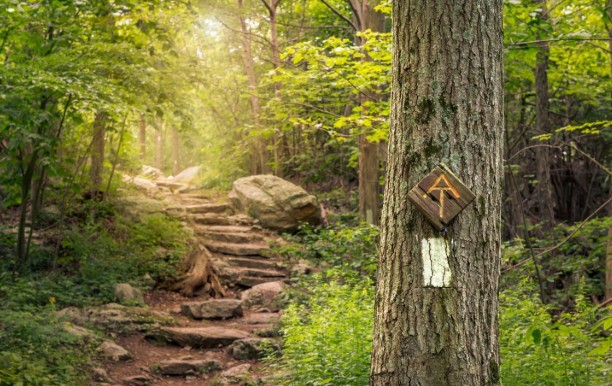
The Appalachian Trail was not on the radar at the start of this trip, until they noticed the trail crossing at Greenville Road; and of course, it was the perfect excuse to stop and walk a few hundred yards along the main route. This is quite near the norther terminus of the route and late starting northbound, through hikers who had spent most of the summer on the trail were closing as fast as practical toward Mt. Katahdin, 50 miles northeast. It is a remote area aside from the road crossing, a primitive parking area for day hikers, and a few mounted directional signs. Just beyond the crossing are the Spectacle Ponds. They had read about local ‘trail angels,’ and a pickup truck in the parking lot was stocked with provisions for those passing through. Near to the ponds a few groups of very scruffy hikers pass by. Terry and Lee would wave and shout hi, and pretend that they were also part of this long journey, though clearly not looking the part, too pale and well fed. Hiking the Appalachian trail seems like it might be an exciting adventure, before you look closer behind the stories that are told. Months on the trail, cold rain, muddy slopes, sleeping in a shelter with a dozen other dirty, hungry hikers, hot days of summer, bugs, more rain and dirt, a mountain snowstorm, unexpected expenses. What part of that looks like fun? Perhaps it is type II fun, only fun after you look back. Or maybe not even then. The thirty-minute taste of the trail was more than enough for them. Safely back in the car they headed north and west again, it was suddenly later than planned, and Moose Mountain Lodge offered respite for the night. They checked in and then headed down the road to the Stress-Free Moose Pub. There is a bit of lost freedom to travel unmoored like this, the off season makes it possible, and the weather cooperated.
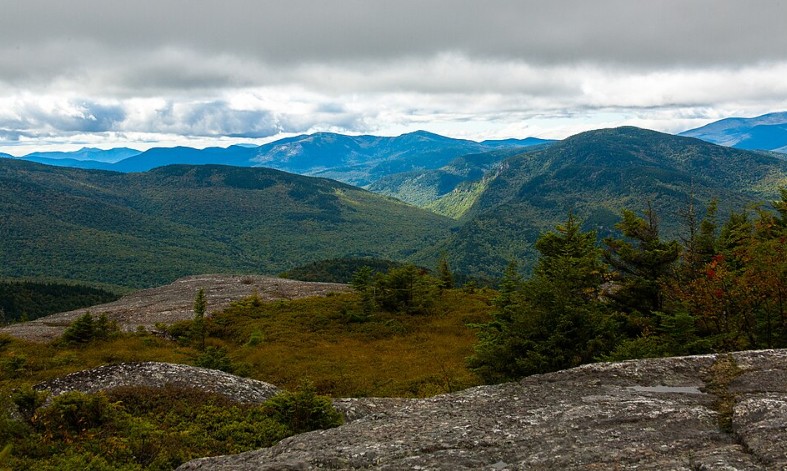
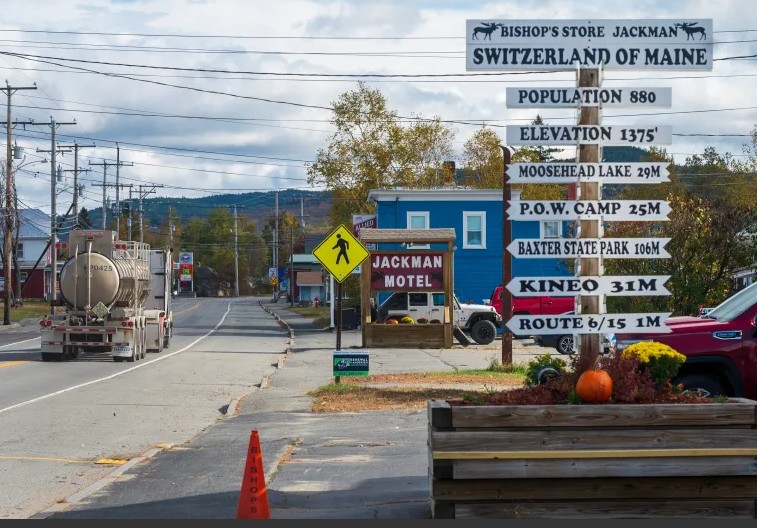
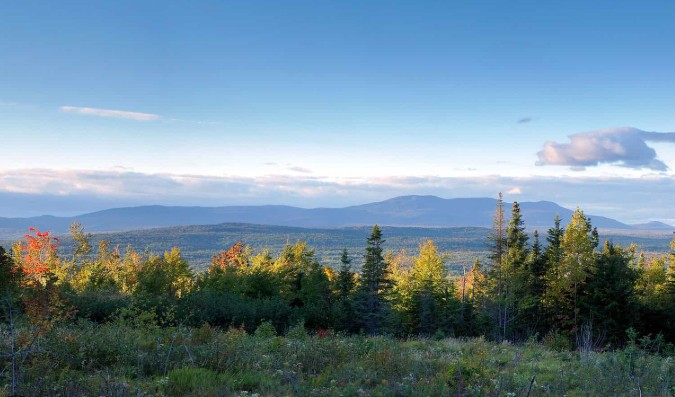
They never ate so good or slept so soundly, free to stop and start as each day desired. Early mornings, still dark, lead Cooper out for a walk, and then a shared run, the skies so dark that the stars above would blind you with their brightness. Out early on a sharp fall morning, scanning for constellations as they moved across the slowly brightening sky. Love, a leisurely breakfast, packing up for more travel as the wind came up and skies suddenly began to darken at mid-morning. It rained all the way to the Canadian border. Cold and hard, sideways rain that soaked you through if you gave it half a chance. They pushed on through Rockwood and Long Pond (a wide spot in the road), to a gas stop in Jackman. The Switzerland of Maine? Really? Wood Pond to the west was obscured by low heavy clouds, it might be glorious in the summer, but not today. Then turning due north through forested countryside, the land flattening now, and a curved shot direct to the Canadian Border. Passports in hand and rabies card for Cooper, they cautiously approached the crossing station. Fortune to approach a friendly and efficient border agent, who asked about their point of origin and destination. A bit of a long story and hard to describe, still holding on to Texas issued drivers licenses and U.S. passports, though claiming a recent residence change to Bar Harbor Maine. They walked him through it and technically were in the clear, with a reminder to pursue change of address as soon as practical. Their ages and Terry’s past Canadian connections saved the day. Terry was like that, she had a way with strangers to make them feel respected and appreciated; she could make friends in ten minutes. He wished that he had that wonderful way with strangers and friends as well, that social intelligence that helps make new connections. How he grew to love her of course.
Attribution: Thomson M
Travel north, northwest —The road widens far ahead —Unmoored from time, place.
Now it is just 90 miles and two hours to Quebec City. Further north at Armstrong, the scenes change from heavy woods to open farm country, paralleling the Chaudière River. Suddenly they are French. And that suits Terry just fine. Crossing the St. Lawrence River, as memories of Quebec City returned to them from prior lives. Easing into the city, grey skies, somber granite homes, still a cold rain and darkening into evening. A hotel booked quite near to the old walled city, they settled in, grabbed some rain gear and headed out for a hot meal. The city receives a steady stream of international tourists in the summer and fall, most by air or cruise ship; the restaurant employees seem to enjoy trying out their English as they explain entrees written in French. The fall weather and the dark evenings suited them well, good food and great company and still further away from home, again alone together. After a “restful” night, the weather tried to improve by morning. Heavy clouds skipped across the western sky, a cold wind and light rain greeted as they ventured out. Day one in Quebec City would not be sunny….
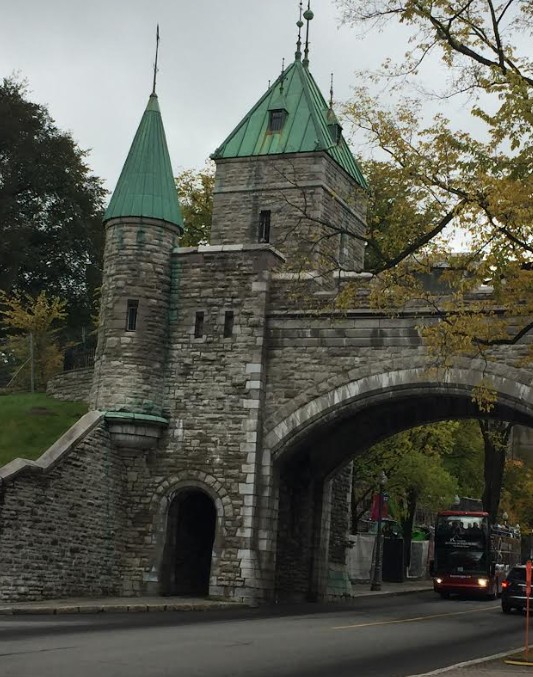
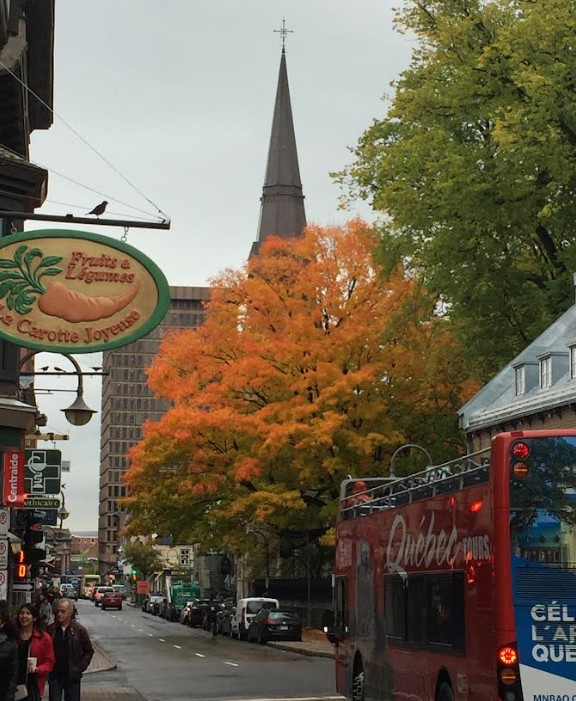
Chapter 5, Quebec City and beyond. What a rich old history they came across. From the original First Nations settlements to the arrival of early French explorers to the formal establishment of Canada as an independent nation. French explorer Jacques Cartier was the first European to ascend the St. Lawrence Gulf, claiming “Canada” for France (and the coming addition of a newly founded “Acadie” – known today as the province of Nova Scotia) to create a dominion known as New France.
History of Québec City | Visit Québec City “The name Québec has its origin with an Algonquin indigenous word, meaning “where the river narrows.” From the cliffs of Québec, it was possible for cannons to fire across the river and, hopefully, prevent enemy ships from penetrating further west. The great cliff of Québec, dominating the St. Lawrence from a height of more than 100 meters, makes the site a natural fortress. Over the centuries, the French, the British and then the Americans all fought to control this very strategic location.” David Mendel; Published on April 19, 2022
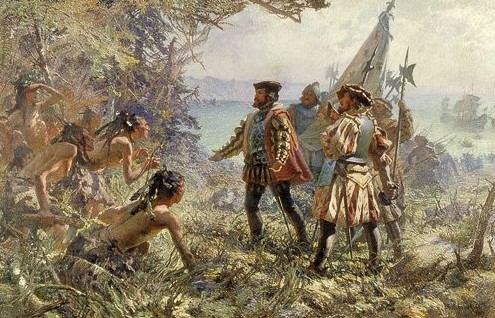
Painting: Jacques Cartier rencontre les indiens de Stadacone, 1535
Friday morning arrived with a brisk north wind and low cloudy skies. Where to find a local breakfast eatery and fresh hot coffee? A short walk down cobbled streets, the owner of the cafe was named Louis Moreau, and he took an interest in them, asking how long they had been together. “Just married? You two look like it.” As it was mid-morning and the breakfast traffic had begun to slow, he pulled up a chair, two chairs, and introduced them to his wife Nadine Marie.
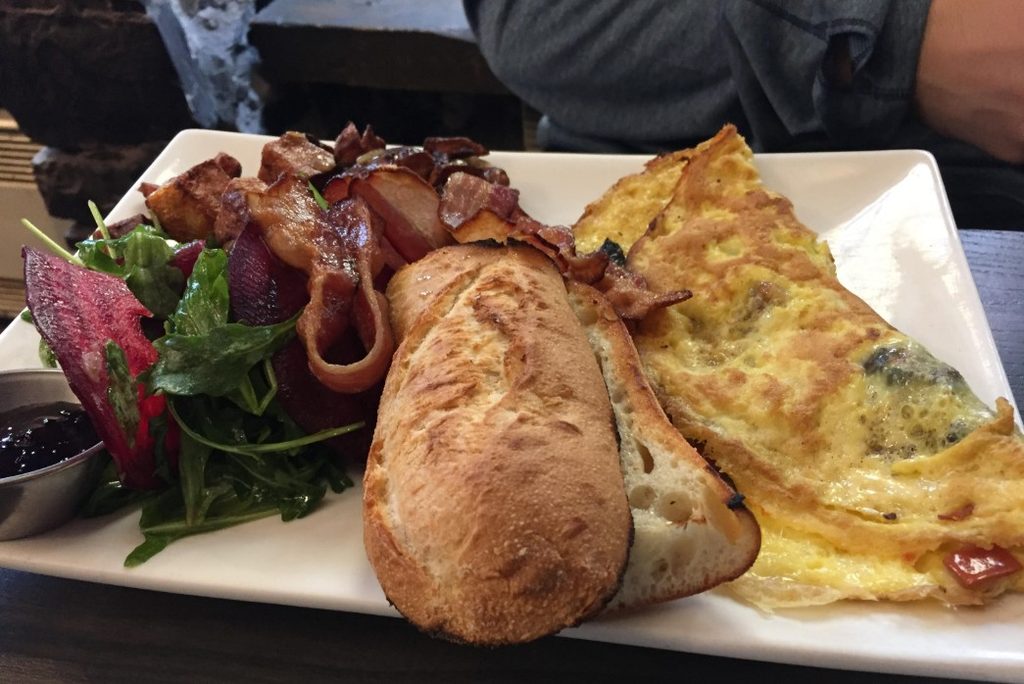
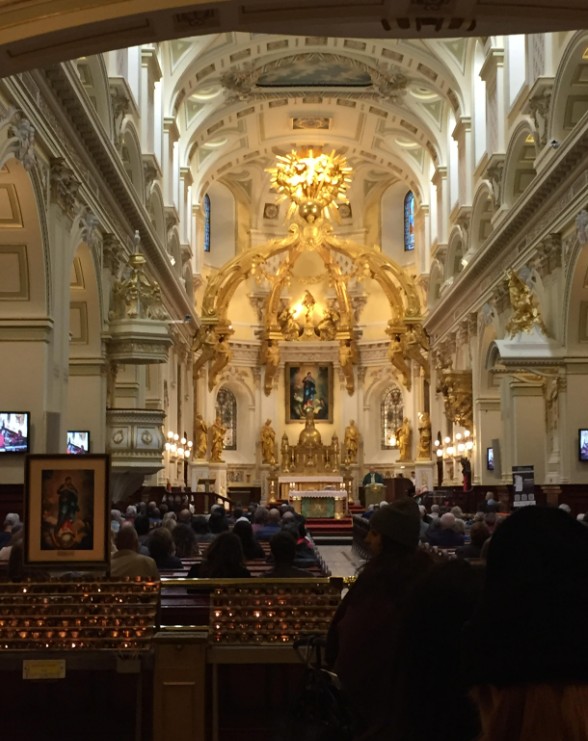
Backstories were shared. Pointers offered on historic buildings, galleries, shops and hidden pathways. They left with wishes for good fortune and exchanged contact info. Terry was an expert, of sorts, on self-guided walking tours. She took on the task of researching a few, and of course he wanted to draw one out on a map of the city. Off they ventured. Small shops and venders along the narrow streets with original art displayed, bookstores, cafes, curio items displayed in small shops, street musicians on audition, wandering tourists passing by. They detour into the Cathedral of Notre-Dame de Quebec Paroisse Notre-Dame de Québec where a noon mass is in progress, and sit quietly in the back pews, a moment of quiet respite. Then more walking and photographs and immersed in the bright fall scenes unfolding all around.
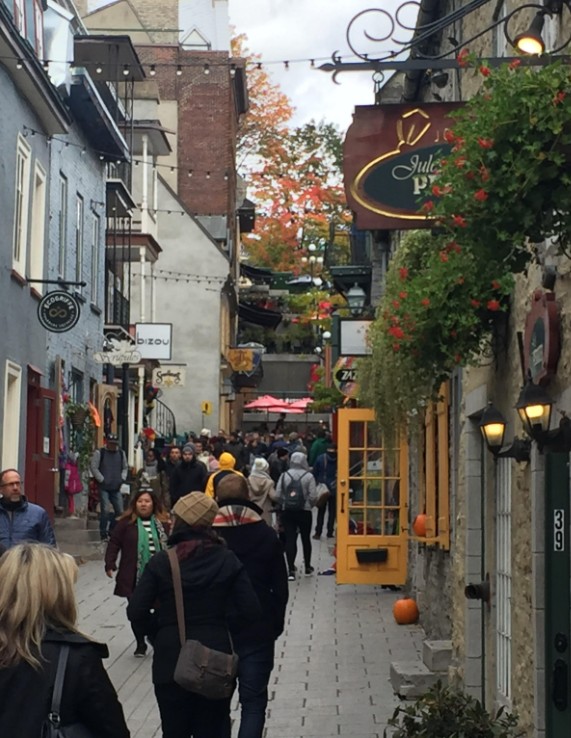
In the midafternoon, striding down a steep street, both slipped, and Terry took a tumble, ending up with a banged-up ankle and a gash across the side of her forehead. Not sure what to do, he texted Louis for advice on treatment centers. “No trouble, my brother is a doctor of family practice, I can drive you there. And we insist that you come over later for some dinner at our house. It makes no sense to sit around a hotel when our hospitality is available.” Patched up and no worse for wear, after a brief respite they regrouped and took the car to dinner. The house was located on The Rue de Bernieres, overlooking the Plans of Abraham along the St. Lawrence River. They drove over and parked across the way in the park, just as the sun began to set in the west, clearing skies, with bright stars aglow to the east. Upon entering they were warmly greeted, seated in the parlor, and served a wonderful sampling of local wines. Everyone hovered around Terry to make her comfortable. Lee shared with the group – “on a previous visit to the city I came across a place near here and envisioned starting fresh, my life and career, settled in a warm house through the dark, frozen winters.” It was an aspiration he had kept close to his heart for many years. Terry nodded knowingly toward him. Louis and Nadine’s house was a traditional Canadian red brick, brightly remodeled inside while still retaining the original oak flooring, fireplace frame and stair railings. A sitting area with floor to ceiling bookshelves looked out over an enclosed garden space, trees and bushes just now turning color and potted annuals still in bloom.
Comfort and conversation flowed through a simple meal of French onion soup, richly prepared, wine and a fresh goat cheese, with sides of warm baguettes. They were introduced to tourtière, a meat pie dish filled with minced veal and potatoes. Coffee and chocolate filled crepes, drizzled with powdered sugar and maple syrup put them down for the count. They talked about past lives and a tentative homestead in Maine as the night grew long; they were comfortable together as a group now. Louis suggested that they could find a good and happy life in Quebec City. The government was providing incentives for professionals to locate and work remote positions – or contribute to building the local economy. At the end of that long, wonderful evening they returned, somewhat exhausted, to the hotel. They loved and slept and woke up together in a dream, so much to reflect on and consider. For the future. There remained a nascent new life to build back in Maine, though gravity was pulling them north and both knew it.
A grand history —We cross the path of many —Who came before us
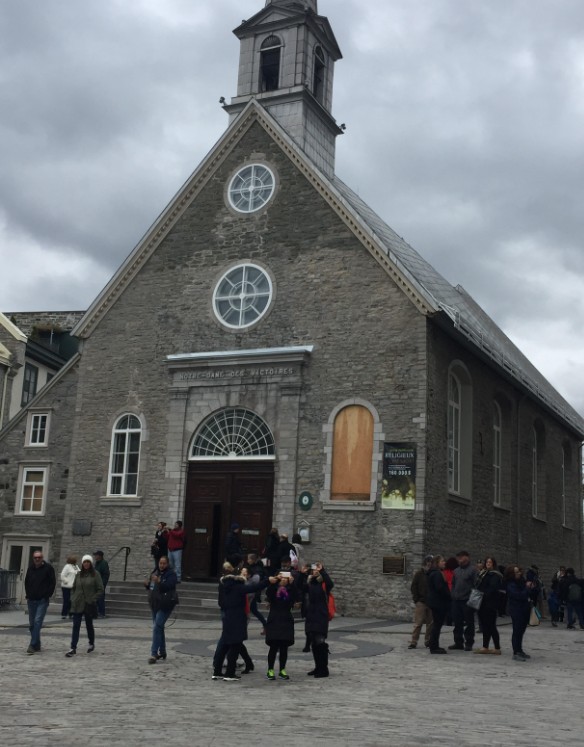
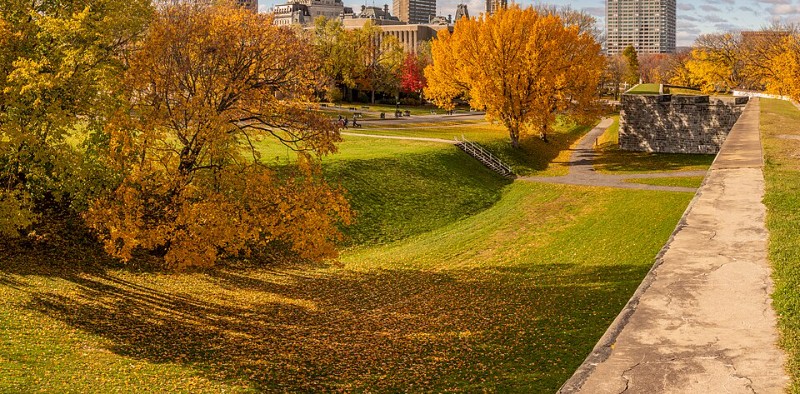
Heading northwest along the St. Lawrence seaway, they had the whole world to their selves. Traveling route 132 just north of the Trans-Canadian highway they hugged the coastline through a dozen or more small villages. Route 132: A Road Trip Guide to Quebec’s Magnetic Frontier | Go Canada Route du fleuve (St. Lawrence Route) | Tourisme Charlevoix
Riding along all the way to Rivière-du-Loup. Long, narrow Seigneurial farmlands stretch away from the river inland, now in final harvest and preparing for the sleep of winter. Cider and cheese for a midday break, looking across the seaway past cargo and cruise ships northward to the impressive Laurentian mountains on the far north shore. Further along the river noticeably widens, turns a deep shade of blue as a sea breeze stirs through open windows. Gradually they approach a series of rocky ridges, the seaway opens yet again with a view of wild islands. Waterfalls tumble beneath the road, sourced in the nearby Notre Dame Mountains.
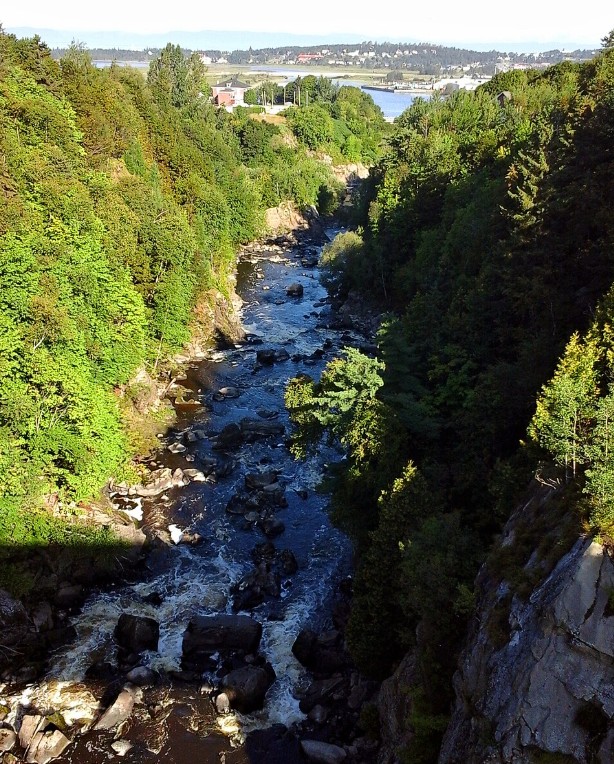
File:Riviere-du-Loup QC.JPG – Wikimedia Commons User:P199 Notre Dame Mountains – Wikipedia

Something like heaven. 5 Reasons to Move to Saguenay-Lac-Saint-Jean After a late lunch of ham and cheese baguettes, they resumed driving, angling south along Route 2 toward the border crossing at Edmundston New Brunswick, then hopping over to Maine Route 1 and parallelling the Canadian border for 25 miles before turning south on U.S. I95.
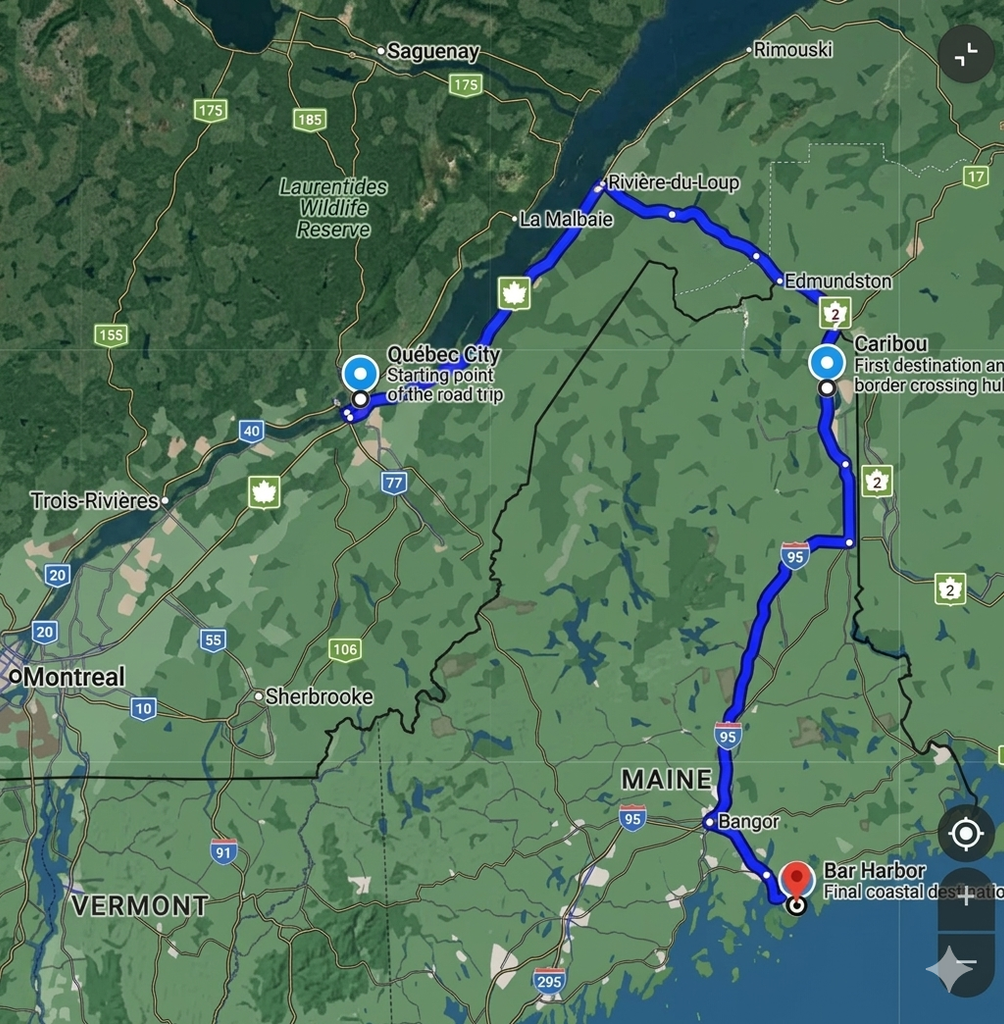
They finally picked up cell service in Caribou Maine with a flood of text messages. Sometimes you get news, a turn of events, bad news, and there is nothing you did to deserve this small fate, nor any responsibility for its occurrence. Their new home, scarcely purchased, lived in for a week, was apparently halfway burned down. Caused by a fire, an electric heater operated next to a stack of framing materials and drywall, left unattended during a dinner break, and there you go. This is a tale of chaos and entropy, the whole point of the remodel was to restore order, energy supplied to the system of improvements. An overload of energy in this case caused a runaway reaction, tipping the scale toward destruction, rather than improvement. There was nothing left to do but return home without delay, assess the damage and consider options to move forward. Or not. They drove for hours, silent in the bright light of a clear autumn day and wrestling each with silent thoughts. Were they on the same page, did they anticipate their respective reactions to the events of the past month, from Texas to Maine, to Ontario? That discussion would wait until one last evening on the road, a short night in the village of Houlton, Maine. Town of Houlton, Maine (houlton-maine.com). Ivey’s Motor Lodge had a few available rooms; the décor was in the late 70’s (of course) and the room had a spa tub right next to the king-sized bed. A definite first. A joint decision to pass on the weekly Bistro Night, whatever that was, and plan for an early departure. Being at that time of year, they awoke to absolute silence, the scenes outside frosted windows were muffled by five inches of white, fluffy snow. Time enough for a shuffling short run and a walk with Cooper, who sniffed at the small snow drifts like he was hunting for lost treasure.
They eased on to the fresh plowed I95 South to Bangor and headed “home”. Except that there was not much of a home to return to. With a small bit of good fortune, their small accumulation of possessions sat preserved in the opposite corner of the house from where the primary damage occurred. In such a small old house the structure was still at a total loss, and the remaining “stuff” was not spared from smoke and grit damage. After wandering around for a bit, they phoned insurance; an adjustor would drive up from Portland in a day, or two. In the meantime, they settled into a summer rental property, opened after season in their honor, on a small side street that was completely deserted. For what it was worth, giving more time to think and plan forward. Maybe this event was a blessing, the best way to view it. Take the settlement, pay off the small house note and re-open life options.
After the first night, they realized that the street we were staying on was not completely deserted. A house down the row had chimney smoke visible in the early morning light. And a horse was grazing in the back yard next to a small barn. In a small town you may be isolated, but never alone. In the city people pass by at all hours, but their eyes are fixed ahead, contained within their own life, and with no time or room to inquire about yours. In the country all eyes are on you. “I noticed that the car sitting in your driveway is not driven very often, is it for sale?”. Or “is the house next door for rent?”. So of course, it didn’t take very long for the new neighbor to wander by and knock on their door. “We don’t see many folks out this way in the offseason”. You are not from around here, are you those digital nomad types, I’ll bet you are. She said as she leaned closer to the door and surveyed our few possessions strewn about the living room. My name is Josey; I run a small stable out of my backyard and offer horseback tours during the summer months. Do you ride? It turns out that Josey was a fixture town. And she was ready to alter the course of their lives. …If she could…